
Industry Knowledge Base
Precision Machining Blog
Technical insights, manufacturing news, and expert articles on high-volume CNC precision components.
Blog
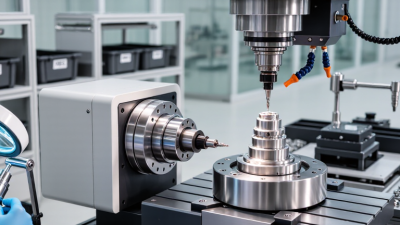
2026 Best Medical Device Precision Machining Suppliers?
Choosing among the 2026 Best Medical Device Precision Machining Suppliers requires more than comparing prices or polished websites. Medical Device Precision Machining supports implants, surgical instruments, diagnostic housings, and other components where tiny variations can affect performance. A reliable supplier must demonstrate repeatable tolerances, documented process controls, material traceability, and disciplined inspection.
W. Edwards Deming, a respected quality-management expert, said, “Quality comes not from inspection, but from the improvement of the production process.” That principle remains highly relevant. Strong suppliers build quality into machining, cleaning, measurement, packaging, and corrective-action systems. They should explain how they manage titanium, stainless steel, cobalt-chrome, PEEK, and other demanding materials. Their facilities should also show practical evidence, such as calibrated CMM reports, tool-life records, validation documents, and controlled production samples.
The best supplier is not always the largest. Sometimes, a focused specialist offers clearer communication and stronger process ownership. A factory floor with clean workstations, labeled material bins, and stable inspection routines often reveals more than impressive marketing language. Still, no supplier is perfect. Capacity claims may change, lead times can slip, and published certifications do not guarantee every project will run smoothly. Buyers should ask difficult questions, review sample documentation, and assess experience with similar medical components.
This guide examines leading suppliers for 2026 through capability, reliability, technical expertise, quality evidence, and customer support. It also considers practical risks that are easy to overlook. Precision begins with honest evaluation.
Read more »
 By:Ethan
- October 16, 2026
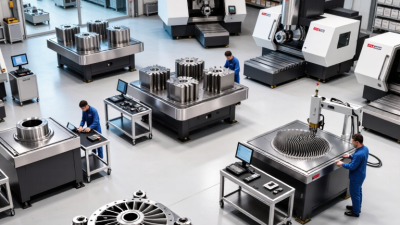
China Best Aerospace Precision Machined Components Supplier?
China Best Aerospace Precision Machined Components Supplier? This question deserves more than a low-price comparison.
The global aerospace market is expanding, but qualification remains demanding. Boeing’s Commercial Market Outlook 2024–2043 forecasts demand for 43,975 new commercial aircraft and $8.8 trillion in related services. Airbus’ Global Market Forecast 2024–2043 estimates 42,430 new aircraft and a $7.7 trillion services market. These figures indicate sustained demand for reliable Aerospace Precision Machined Components, including turbine parts, structural fittings, housings, and flight-control hardware.
China offers extensive machining capacity, advanced equipment, and competitive production costs. A capable supplier should operate five-axis CNC machines, coordinate-measuring systems, controlled inspection rooms, and documented material traceability. It should also understand aerospace standards such as AS9100, AS9102 First Article Inspection, and relevant NADCAP requirements. Certificates alone are not enough. Ask for process records, inspection reports, surface-finish data, and evidence of repeatable tolerances.
Small details matter.
A 0.02-millimeter deviation can affect assembly alignment, sealing, or fatigue performance. Experienced suppliers communicate clearly about aluminum alloys, titanium grades, nickel-based superalloys, heat treatment, coatings, and export-control responsibilities. They also identify production risks before cutting metal. That practical discipline separates a qualified partner from a trading intermediary.
No supplier is flawless. Even an advanced factory may face tooling wear, delayed raw materials, or inconsistent subcontracting. Buyers should therefore audit capacity, review corrective-action history, and test sample parts before approving volume production. The best China-based supplier is not simply the cheapest option. It is the partner that combines engineering judgment, traceability, transparent communication, and dependable delivery.
Read more »
 By:Madeline
- October 11, 2026
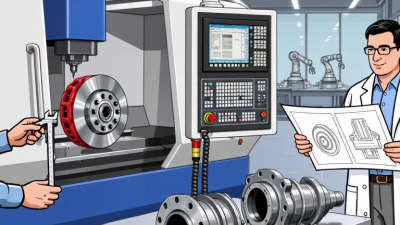
How to Choose Commercial Automotive Precision Machining?
Choosing Commercial Automotive Precision Machining requires more than comparing prices on a supplier website. Automotive parts must fit repeatedly, perform under vibration, and survive heat, moisture, and demanding production schedules. A small dimensional error in a brake component, steering housing, or transmission part can create costly delays. Therefore, buyers should examine machining capability, inspection systems, material knowledge, and delivery performance together.
Look for a manufacturer with proven automotive experience and documented quality procedures. Ask about CNC equipment, tolerance control, surface finishing, and in-process inspection. Reliable suppliers should explain how they verify critical dimensions using coordinate measuring machines, gauges, and traceable records. Request samples, inspection reports, and practical case details. A polished brochure is not enough. Real evidence matters.
The right partner also understands design-for-manufacturing principles. Engineers should review drawings, identify difficult features, and suggest improvements without weakening the part. Communication must remain clear from quotation through production. Check capacity before placing large orders, especially when volumes may change quickly. Certifications can support confidence, but they do not replace technical judgment. No supplier is perfect, and no checklist catches every risk. That is why trial runs, honest feedback, and continuous review remain valuable. Choosing Commercial Automotive Precision Machining should be a measured decision based on experience, verified performance, and transparent cooperation. The cheapest option may not be the safest. Reliability has a cost. Sometimes, that cost prevents a much larger one.
Read more »
By:Madeline
- October 6, 2026
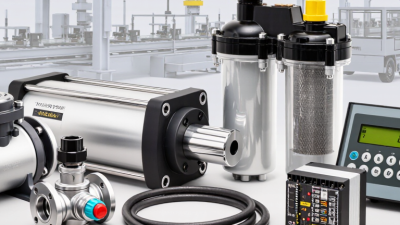
2026 Best Hydraulics and Fluid Power Components to Buy
Choosing the right Hydraulics and Fluid Power Components in 2026 requires more than comparing prices or catalog specifications. Pumps, valves, cylinders, filters, hoses, sensors, and control units must work as one dependable system. A component that looks efficient on paper may waste energy under heat, contamination, or repeated shock loads.
Fluid-power educator Brendan Casey states, “A hydraulic system is only as good as its weakest component.” This practical warning should guide every buying decision. A premium pump cannot compensate for a restricted return line. A precise valve cannot perform reliably with dirty oil. Small mismatches become expensive failures.
This guide examines the 2026 components worth considering for mobile equipment, manufacturing machinery, agricultural systems, and industrial automation. It focuses on measurable evidence, including pressure ratings, flow stability, volumetric efficiency, response time, sealing quality, service access, and total operating cost. Real-world durability matters.
Look beyond the brochure.
A maintenance engineer should inspect connection standards, replacement availability, warranty terms, and manufacturer support. Energy consumption also deserves attention, especially where equipment runs continuously. Smart sensors and electrohydraulic controls may improve monitoring, but they can add software complexity and cybersecurity concerns.
There is no universal best component. That is the uncomfortable part. A compact proportional valve may outperform a larger model in one machine and fail in another. Installation quality, fluid cleanliness, operator habits, and maintenance schedules can change the result.
The following overview highlights strong options while acknowledging practical limitations. It aims to support informed purchasing, not promote a single brand. That distinction matters when reliability, safety, and long-term performance are at stake.
Read more »
By:Ethan
- October 1, 2026
China Top 10 High Volume Precision Machining Suppliers
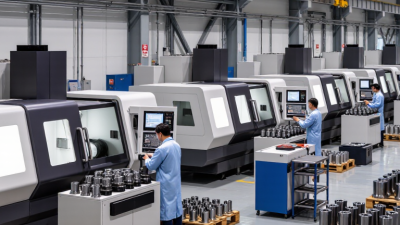
High-Volume Precision Machining depends on repeatable accuracy, stable cycle times, and disciplined process control. A small variation in a bore or thread can disrupt assembly across thousands of parts. The stakes are practical.
Grand View Research valued the global CNC machine market at US$101.22 billion in 2023. Its report projects continued growth through 2030. This figure covers CNC machines broadly, not precision machining suppliers alone, so it is useful context—not a direct measure of supplier demand. Deloitte and the Manufacturing Institute’s 2024 workforce study also projected that U.S. manufacturing could need 3.8 million workers by 2033, with as many as 1.9 million positions potentially unfilled. For buyers, these trends make automation, skilled operators, and resilient capacity worth examining together.
Manufacturing scholar Jeffrey K. Liker, author of The Toyota Way, offers a relevant production principle: “Create continuous process flow to bring problems to the surface.” Applied to machining, that means watching more than quoted tolerances. Buyers should assess inspection methods, machine uptime, tooling strategy, and documented corrective action. A polished capability sheet is not proof.
This China Top 10 High Volume Precision Machining Suppliers overview is intended as a practical starting point for supplier comparison. Company claims still need verification. A supplier list cannot reveal every shop-floor constraint, and rankings alone can miss a strong technical fit. Check sample parts, quality records, communication practices, and production capacity before making a sourcing decision.
Read more »
By:Madeline
- September 26, 2026
What Are Precision Turned Components?
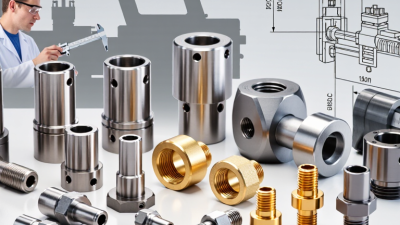
Precision Turned Components are small, accurately machined parts produced on turning equipment. They often include pins, shafts, bushings, connectors, and threaded inserts. A cutting tool removes material while the workpiece rotates at controlled speed. The result may look simple, but its performance depends on careful engineering. A component measuring only a few millimeters can influence an entire assembly. That is why manufacturers define dimensions, tolerances, surface finishes, and material grades before production begins.
Precision starts with the drawing.
Modern CNC lathes and Swiss-type machines can produce complex profiles with repeatable accuracy. They may work with stainless steel, brass, aluminum, titanium, or engineered plastics. Skilled technicians also consider tool wear, heat, vibration, and chip control. These details affect threads, bores, shoulders, and concentricity. In practice, inspection may involve micrometers, optical comparators, gauges, or coordinate measuring machines. Reliable suppliers record results and connect them to a clear quality process.
However, “precision” is not a magic label. A tight tolerance may be unnecessary, expensive, or difficult to maintain during high-volume production. A component can meet its drawing and still perform poorly if the material, finish, or mating part is unsuitable. This is where experience matters. Engineers should review function, assembly conditions, environmental exposure, and inspection requirements together. The best solution is not always the smallest tolerance. It is the most dependable balance between accuracy, cost, manufacturability, and service life. Mistakes still happen, so thoughtful review remains essential.
Read more »
By:Madeline
- September 21, 2026
2026 Top CAM Multi Spindle Machining Suppliers?
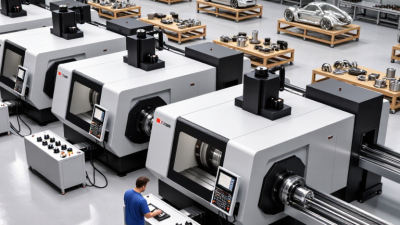
Choosing the right CAM Multi-Spindle Machining supplier in 2026 requires more than comparing machine counts or website claims. Manufacturers need dependable production partners for complex, repeatable parts, especially in automotive, medical, aerospace, electronics, and precision equipment applications. A supplier may advertise high spindle speeds, tight tolerances, and rapid delivery. Real performance is proven differently.
This guide examines leading suppliers through practical criteria, including CAM programming capability, multi-spindle synchronization, bar capacity, live tooling, inspection systems, and production scalability. Details matter. A stable process should hold dimensions across long batches, not only during a short sample run. Quality records, traceable inspection reports, equipment maintenance, and clear engineering communication also deserve close attention. In some facilities, a finished component may pass through several machining stages before reaching a coordinate measuring machine. That workflow reveals more than polished marketing language.
Supplier comparisons will also consider material experience, prototype support, production volumes, quoted lead times, and responses to design changes. These factors can expose hidden costs, such as repeated setup adjustments or unclear tolerance interpretation. Not every highly automated shop is the best fit. Sometimes, a smaller supplier provides stronger technical attention and faster corrective action. That is worth questioning.
The evaluation is not perfect. Supplier capabilities change, and published information may become outdated. Buyer feedback can also reflect one project rather than consistent performance. For that reason, this overview encourages direct audits, sample reviews, and documented technical discussions before final selection. Reliable sourcing begins with evidence, not assumptions.
Read more »
By:Ethan
- September 16, 2026
Why Choose Swiss CNC Single Spindle Machining for Precision?
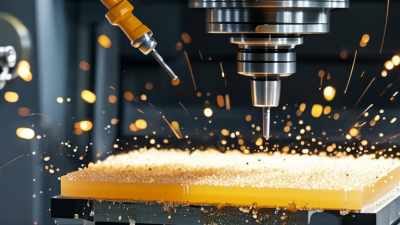
In the realm of precision manufacturing, "Swiss CNC Single Spindle Machining" stands as a hallmark of quality and accuracy. This method allows for high-speed production of intricate parts, making it crucial for industries ranging from aerospace to medical devices. According to a recent report by the International Association of Manufacturing Engineers, Swiss CNC machining can enhance efficiency by up to 30%.
Expert Robert Klein, a leading authority in CNC technology, emphasizes, "Precision is no longer optional; it's the standard." His insight underscores the growing demand for devices that require tight tolerances. Swiss CNC Single Spindle Machining excels in creating such components with minimal waste and maximum efficiency.
While this technology showcases remarkable advantages, it also faces challenges. Machine setup costs can be high, and skilled operators are essential. Continuous operator training is vital for maintaining peak performance. Investing in Swiss CNC Single Spindle Machining may offer significant returns, but careful planning is key to overcoming the hurdles.
Read more »
By:Ethan
- August 27, 2026
2026 Best CNC Multi-Spindle Machining Solutions for Buyers
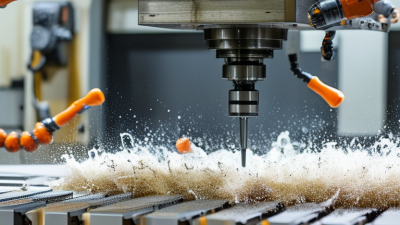
The machining industry has evolved significantly, with CNC Multi-Spindle Machining at its forefront. According to a report by MarketsandMarkets, the global CNC machine market is projected to reach $100 billion by 2026. This growth highlights the increasing reliance on automated solutions, particularly for precision and efficiency. CNC Multi-Spindle Machining offers distinct advantages, such as reducing cycle times and enhancing production rates.
However, challenges persist. Buyers must navigate complex selections while ensuring compatibility with existing systems. It's crucial to understand the features of various multi-spindle machines. Not all brands provide the same level of service or performance reliability. In a market saturated with options, discerning the best solutions demands in-depth research and industry knowledge.
While the benefits of CNC Multi-Spindle Machining are clear, potential pitfalls exist. Information overload can cloud decision-making. Therefore, engaging with knowledgeable suppliers and experts is essential for making informed choices. Focusing on quality and long-term support will guide buyers toward successful investments in CNC technology.
Read more »
 By:Lila
- August 27, 2026
Essential Tips for Choosing CNC Rotary Transfer Equipment?
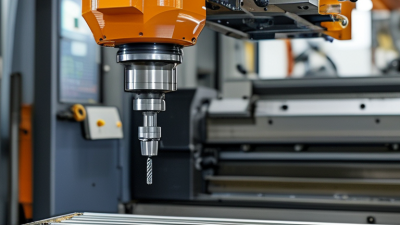
Choosing the right CNC Rotary Transfer Equipment can greatly influence your manufacturing efficiency. This equipment plays a key role in automating complex machining processes. It ensures accuracy, speeds up production, and reduces waste.
Understanding your production needs is vital. Not all CNC Rotary Transfer Equipment is the same. Variations in design, size, and capabilities affect performance. Assessing the specific demands of your projects can lead to better decision-making. It's important to consider the materials and the types of parts you'll produce.
Moreover, the reputation of the manufacturer cannot be overlooked. Trusted brands often offer better support, warranties, and quality assurance. Reviewing user feedback can provide insights into real-world performance. This helps in making a well-informed choice. However, some may overlook these details, leading to suboptimal investment.
Read more »
By:Ethan
- August 27, 2026