
Industry Knowledge Base

Precision Machining Blog

Technical insights, manufacturing news, and expert articles on high-volume CNC precision components.

0%

China Best Aerospace Precision Machined Components Supplier? This question deserves more than a low-price comparison.

The global aerospace market is expanding, but qualification remains demanding. Boeing’s Commercial Market Outlook 2024–2043 forecasts demand for 43,975 new commercial aircraft and $8.8 trillion in related services. Airbus’ Global Market Forecast 2024–2043 estimates 42,430 new aircraft and a $7.7 trillion services market. These figures indicate sustained demand for reliable Aerospace Precision Machined Components, including turbine parts, structural fittings, housings, and flight-control hardware.

China offers extensive machining capacity, advanced equipment, and competitive production costs. A capable supplier should operate five-axis CNC machines, coordinate-measuring systems, controlled inspection rooms, and documented material traceability. It should also understand aerospace standards such as AS9100, AS9102 First Article Inspection, and relevant NADCAP requirements. Certificates alone are not enough. Ask for process records, inspection reports, surface-finish data, and evidence of repeatable tolerances.

Small details matter.

A 0.02-millimeter deviation can affect assembly alignment, sealing, or fatigue performance. Experienced suppliers communicate clearly about aluminum alloys, titanium grades, nickel-based superalloys, heat treatment, coatings, and export-control responsibilities. They also identify production risks before cutting metal. That practical discipline separates a qualified partner from a trading intermediary.

No supplier is flawless. Even an advanced factory may face tooling wear, delayed raw materials, or inconsistent subcontracting. Buyers should therefore audit capacity, review corrective-action history, and test sample parts before approving volume production. The best China-based supplier is not simply the cheapest option. It is the partner that combines engineering judgment, traceability, transparent communication, and dependable delivery.
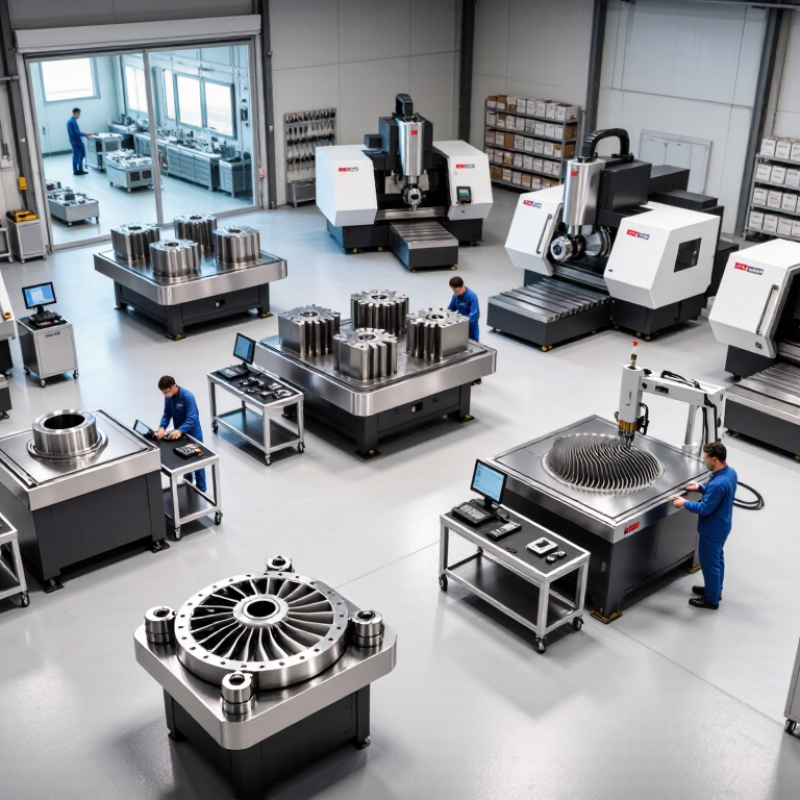
China Best Aerospace Precision Machined Components Supplier?

Definition of Aerospace Precision Machined Components

Aerospace precision machined components are engineered parts made for aircraft, spacecraft, and supporting systems. They are produced with extremely tight dimensional tolerances and controlled surface finishes. Their definition includes geometry, material behavior, production accuracy, and inspection requirements. Typical examples include brackets, housings, fittings, shafts, and structural connectors. Size alone does not define precision. A small internal feature may demand more control than a larger visible surface.

In China’s aerospace manufacturing sector, these parts are commonly machined from aluminum alloys, titanium, stainless steel, and high-temperature materials. Each material reacts differently to cutting heat, tool pressure, and finishing operations. Experienced engineers study the drawing, tolerance zones, machining sequence, and intended service environment. They also consider vibration, corrosion, weight, and repeated loading. In practical production, fixture stability matters greatly. A perfect program can still fail on an unstable setup.

Quality assurance is part of the definition, not an optional final step. Coordinate measuring machines verify critical dimensions. Surface instruments check roughness and finishing consistency. Material certificates, inspection records, and process traceability support reliable aerospace production. No process is flawless. A drawing can be technically correct but difficult to manufacture consistently. That gap requires careful communication, realistic tolerances, and repeated review between engineering and machining teams. Small measurement errors may become serious assembly problems later.

Key Materials and Manufacturing Processes in China

China Best Aerospace Precision Machined Components Supplier?

Aerospace components demand stable materials and tightly controlled machining. Aluminum 7075 is common for lightweight brackets and housings. It offers high strength with manageable cutting forces. Titanium Ti-6Al-4V suits load-bearing parts and hot structural zones. However, titanium generates heat quickly during machining. Inconel 718 handles severe temperatures but requires slower cutting and rigid tooling. Stainless steel 17-4 PH supports fittings, shafts, and corrosion-resistant assemblies.

The manufacturing route usually begins with certified material and complete heat-lot traceability. Five-axis CNC machining can reduce setups and protect positional accuracy. Turning handles cylindrical features, while wire EDM creates narrow slots and complex profiles. Heat treatment must follow approved parameters. Surface treatments may include anodizing, passivation, or controlled shot peening. Each process changes the part’s dimensional behavior.

Inspection is not a final formality. It starts with in-process probing and continues through calibrated CMM measurement. Critical bores may need roundness, concentricity, and surface-finish checks. Manufacturing records should connect the drawing, material certificate, machine data, and inspection report. No process is perfect. Tool wear can remain unnoticed between scheduled checks. That weakness deserves review. A dependable supplier should explain deviations clearly, preserve traceability, and correct recurring causes rather than hide small errors.

Quality Standards and Certifications for Aerospace Suppliers

China Best Aerospace Precision Machined Components Supplier?

Aerospace buyers should evaluate certification depth, not marketing claims. AS9100 certification demonstrates a structured quality management system for aviation and space manufacturing. ISO 9001 supports process consistency, while ISO/IEC 17025 strengthens measurement reliability. Suppliers should also provide material certificates, lot traceability, inspection records, and first article inspection reports based on AS9102 practices. A missing traceability link can delay an entire production batch.

Industry data shows why these controls matter. The Aerospace Industries Association reported that the aerospace and defense sector generated about 955 billion dollars in U.S. sales during 2023. The report also identified more than 2.2 million supported jobs. Such scale demands stable supply chains and repeatable machining performance. A capable Chinese supplier should explain machine calibration intervals, operator training, nonconformance handling, and corrective action evidence. Certification alone is not proof of perfection.

Tips: Request a recent audit summary, sample inspection report, and process capability data. Check whether certificates cover the exact facility and production scope. Ask for evidence of temperature-controlled inspection, calibrated CMM equipment, and secure document retention. A supplier may have excellent equipment but weak records. That gap deserves careful questioning.

How to Evaluate China’s Best Precision Machining Supplier

Choosing China’s best aerospace precision machining supplier requires evidence, not polished promises.

The Aerospace Industries Association reported approximately $955 billion in U.S. aerospace and defense sales for 2023. Such scale increases pressure on quality, delivery, and traceability.

Ask for documented experience with titanium, aluminum, and high-temperature alloys. Review equipment lists, five-axis machining capability, calibration records, and inspection procedures.

A reliable supplier should provide material certificates, batch traceability, first-article inspection records, and dimensional reports from calibrated CMM equipment. Check process capability data, such as Cp and Cpk, instead of accepting “zero defects” claims.

Surface roughness, burr control, thread accuracy, and hole-position tolerances deserve physical samples. Request an audit, even a remote one. Factory videos are not enough.

The 2024 Deloitte Aerospace and Defense Industry Outlook emphasizes resilient supply chains, digital visibility, and disciplined production control. Therefore, evaluate ERP traceability, revision management, nonconformance handling, and backup capacity.

Ask how the supplier reacts when a tool breaks during a titanium batch. The answer reveals practical experience.

Pricing still matters, but unusually low quotes may hide weak inspection or unstable processes. I would also compare three recent delivery records, though this step is often skipped. A small pilot order can expose communication gaps before production becomes expensive.

Applications Across Aircraft and Spacecraft Systems

China Best Aerospace Precision Machined Components Supplier?

Aerospace precision machined components support many aircraft systems. Examples include landing gear fittings, actuator housings, engine brackets, and seat-track structures. These parts often use aluminum, titanium, stainless steel, or nickel-based alloys. Each material demands different cutting speeds, tooling, and inspection methods. A reliable supplier should understand machining behavior, not only operate CNC equipment. Dimensional reports, material certificates, and batch traceability help engineers verify every shipment.

Spacecraft applications require even tighter process discipline. Precision components may serve satellite frames, thermal-control assemblies, propulsion supports, and instrument mounts. Small errors can affect alignment, vibration resistance, or assembly clearance. Clean handling is also important when parts enter sensitive spacecraft environments. Practical experience with multi-axis machining and difficult alloys can reduce production risks. Still, no machining plan is perfect. Tool wear, distortion, and unclear drawing notes can create unexpected problems.

Tips: Request inspection records before production begins. Confirm tolerances, surface finishes, packaging methods, and revision control. Ask how the supplier manages first-article inspection and nonconforming parts. A short technical review can reveal more than a polished quotation. For aircraft and spacecraft projects, dependable communication matters as much as equipment. Sometimes, the overlooked detail is the real failure point.

China Best Aerospace Precision Machined Components Supplier? - Applications Across Aircraft and Spacecraft Systems

Aircraft or Spacecraft System Typical Precision-Machined Components Common Engineering Materials Typical Dimensional Requirement Key Operating Conditions Important Quality Considerations
Flight Control Systems Actuator housings, clevises, hinge fittings, bearing retainers, control-link components Aluminum alloys Titanium alloys Corrosion-resistant steel Typical critical-feature tolerances of approximately ±0.01–0.05 mm, depending on component size and drawing requirements Repeated vibration, cyclic loading, temperature variation, and strict weight limitations Dimensional inspection, material traceability, surface-finish verification, burr removal, and fatigue-critical feature control
Landing Gear and Wheel Assemblies Axle parts, torque links, trunnion fittings, bushings, spacers, brake-system housings High-strength steel Titanium alloys Aluminum alloys Bearing and mating diameters commonly require tight fits; exact limits are defined by the engineering drawing and fit class High impact loads, hydraulic loads, corrosion exposure, braking heat, and repeated landing cycles Hardness testing where specified, non-destructive inspection for critical parts, concentricity control, and corrosion protection
Hydraulic and Fuel Systems Manifold blocks, valve bodies, adapters, injector bodies, precision fittings, tube-interface components Aluminum alloys Stainless steel Nickel-based alloys Titanium alloys Port geometry, sealing lands, and internal passages may require tolerances in the hundredths of a millimeter range Pressurized fluid, chemical exposure, temperature cycling, vibration, and contamination sensitivity Pressure testing, cleanliness control, leak testing, thread inspection, internal-passage verification, and surface-finish control on sealing areas
Engine and Propulsion Mounting Engine mount fittings, structural brackets, flanges, attachment lugs, alignment components Titanium alloys High-strength steel Nickel-based alloys Hole position, flatness, and alignment requirements are typically more critical than general profile tolerances High vibration, thermal gradients, static and dynamic loads, and elevated temperatures near propulsion equipment Material certification, grain-flow or forging-process documentation when applicable, dimensional mapping, and crack-sensitive inspection
Avionics and Electrical Enclosures Electronic equipment chassis, connector backshells, heat-sink bodies, shielding covers, mounting plates Aluminum alloys Magnesium alloys Copper alloys Stainless steel Typical enclosure and connector features may use ±0.02–0.10 mm tolerances, subject to interface and thermal requirements Electromagnetic compatibility requirements, vibration, thermal dissipation, humidity, and low mass objectives Flatness and positional accuracy, electrical bonding surfaces, coating thickness, burr control, and thermal-interface inspection
Satellite Structural Subsystems Payload brackets, instrument frames, panel fittings, separation-interface parts, equipment mounting rails Aluminum alloys Titanium alloys Stainless steel Carbon-fiber-compatible metals Interface-hole location, flatness, and alignment are commonly controlled to support launch-load and payload-integration requirements Launch vibration, shock, vacuum, thermal cycling, and strict mass-budget constraints Low-outgassing process control where required, cleanliness, dimensional inspection, fastener-interface verification, and surface-treatment control
Spacecraft Propellant Management Propellant valve bodies, feed-system manifolds, injector components, tank fittings, pressure-regulation parts Stainless steel Titanium alloys Nickel-based alloys Aluminum alloys Internal passages, sealing surfaces, and valve interfaces may require tight geometric control and documented surface finishes Vacuum, cryogenic or elevated temperatures, pressurized propellants, chemical compatibility, and launch vibration Helium leak testing, cleaning and particle control, pressure proof testing, surface-finish measurement, and complete material records
Thermal Control and Heat Management Heat-sink bodies, thermal straps, cold plates, radiator fittings, sensor mounts, interface blocks Aluminum alloys Copper alloys Molybdenum alloys Stainless steel Flatness and contact-surface requirements are critical; typical values depend on thermal-interface design and assembly method Repeated thermal cycling, vacuum, differential thermal expansion, and controlled heat-transfer paths Flatness measurement, thermal-interface surface inspection, coating or plating verification, cleanliness, and dimensional stability checks
Optical and Sensor Assemblies Optical benches, lens mounts, detector housings, alignment brackets, sensor frames, mirror supports Aluminum alloys Titanium alloys Stainless steel Low-expansion alloys Alignment, concentricity, perpendicularity, and surface finish can be more critical than general dimensional tolerance Thermal drift, launch vibration, vacuum, contamination risk, and sensitivity to micro-misalignment Coordinate-measuring inspection, cleanliness control, controlled clamping, surface-finish measurement, and alignment verification
Communication and Antenna Systems Waveguide bodies, antenna brackets, RF housings, feed supports, precision flanges, connector panels Aluminum alloys Copper alloys Stainless steel Titanium alloys Waveguide dimensions, flange alignment, connector position, and electrical-contact surfaces require controlled geometry Vacuum, thermal cycling, vibration, electromagnetic compatibility requirements, and possible radiation exposure Dimensional inspection, surface-finish verification, electrical bonding checks, coating thickness control, and contamination prevention

Note: The tolerances and materials shown are representative engineering ranges for aerospace precision machining. Final requirements must always follow the approved component drawing, applicable specifications, material condition, inspection plan, and mission environment.

FAQS

What are aerospace precision machined components?

They are engineered parts for aircraft, spacecraft, and support systems. Examples include brackets, housings, fittings, shafts, and structural connectors. Small features matter.

What makes these components “precision” parts?

Precision involves tight dimensions, controlled surfaces, material behavior, and inspection requirements. Size alone does not define precision. An internal bore may need stricter control than a large outer face.

Which materials are commonly used?

Common materials include aluminum alloys, titanium, stainless steel, and high-temperature alloys. Aluminum supports lightweight structures. Titanium suits heavily loaded areas. High-temperature alloys resist severe heat.

How does material choice affect machining?

Each material responds differently to cutting heat, tool pressure, and finishing. Titanium can build heat quickly. High-temperature alloys often require slower cutting and rigid tooling. Mistakes happen.

Which machining processes are commonly applied?

Five-axis CNC machining can reduce setups and protect positional accuracy. Turning produces cylindrical features. Wire EDM creates narrow slots and complex profiles. Heat treatment follows approved parameters.

How are aerospace components inspected?

Inspection may include probing, coordinate measurement, roundness checks, concentricity checks, and surface-finish testing. Calibrated equipment verifies critical dimensions. Records should connect materials, machines, drawings, and results.

Why is traceability important?

Traceability links each part to its material certificate, heat lot, process data, and inspection report. It helps identify recurring problems. Missing records create uncertainty later.

What problems can occur during production?

Unstable fixtures can reduce accuracy, even with a correct program. Tool wear may remain unnoticed between inspections. A technically correct drawing may still be difficult to produce consistently.

How can manufacturing quality improve?

Engineering and machining teams should review tolerances, machining sequences, and service conditions together. Deviations need clear explanations. Correcting repeated causes matters more than hiding small errors.

Conclusion

Aerospace Precision Machined Components are highly accurate parts designed for aircraft, spacecraft, propulsion systems, avionics, landing gear, structural assemblies, and other demanding aerospace applications. China has developed strong capabilities in producing these components from materials such as aerospace aluminum, titanium alloys, stainless steel, nickel-based alloys, and advanced engineering plastics. Common manufacturing processes include CNC milling and turning, multi-axis machining, grinding, electrical discharge machining, heat treatment, and precision surface finishing.

When evaluating a China-based aerospace machining supplier, buyers should examine technical expertise, equipment capability, production consistency, traceability, inspection systems, and experience with complex geometries and tight tolerances. Reliable suppliers should follow recognized aerospace quality standards and maintain appropriate certifications, documented process controls, material verification, and rigorous dimensional testing. The best supplier is not simply the one offering the lowest price, but the one that can deliver stable quality, secure communication, dependable lead times, and complete documentation for components used across aircraft and spacecraft systems.

Madeline

Madeline

Madeline is a dedicated marketing professional with an exceptional expertise in the company’s suite of products. With a keen understanding of market dynamics and consumer behavior, she crafts insightful content that not only showcases the latest offerings but also highlights the unique advantages......