
Strategic Engineering Context: Elevating Precision Through Robotic Weld Operations
In modern high-precision manufacturing, structural components for aerospace, hydraulics, commercial automotive, and heavy industrial machinery rarely rely on single-piece turning or manual welding alone. Global procurement teams and senior engineering directors face a persistent operational challenge: how to unite high-volume turned parts with structural sub-assemblies without sacrificing dimensional tolerances, grain structure integrity, or total cost per part (TCO).
At DuPage Machine Products, our Robotic Weld Operations represent the fusion of multi-axis automation and high-end contract machining. Operating out of our 245,000 sq. ft. facility equipped with over 150 high-end CNC machines, we eliminate traditional manufacturing bottlenecks by manufacturing pre-machined weldments, managing precise automated robotic torch paths, and applying post-weld fine finishing under a single unified quality umbrella.
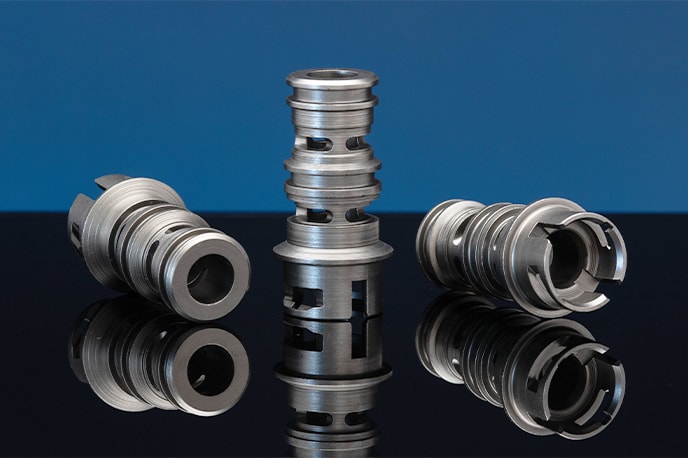
Why Pre-Machining Precision Controls Weld Quality
Robotic welding arms execute trajectory programs with spatial repeatability of ±0.02mm. However, if the mating turned components produced during joint prep vary by even ±0.10mm, joint gap inconsistencies cause localized burn-through, incomplete fusion, or excessive thermal distortion.
By leveraging our high-volume CNC multi-spindle and Swiss CNC turned component production, we deliver mating parts with exact chamfers, tight root face land tolerances, and pristine surface finishes—ensuring that every automated robotic weld cycle runs flawlessly without adaptive override faults.
Recommended Robotic Weld Operation Solutions for Global Sourcing
Procurement teams seeking long-term contract manufacturing partnerships require tailored weldment configurations matching specific pressure ratings, fatigue limits, and environmental exposures. Below are the key automated robotic weld solutions engineered within our production ecosystem:
1. Automated Robotic MIG/MAG (GMAW) Weld Cells
Designed for high-throughput carbon steel and structural alloy assemblies. Equipped with synchronized dual-axis positioners, these cells rotate components continuously during deposition, maintaining optimal down-hand welding vectors. Ideal for heavy-duty commercial automotive brackets, fluid manifolds, and structural hydraulic mounts.
2. Precision Robotic TIG (GTAW) High-Integrity Cells
Engineered for flight-critical aerospace fittings, stainless steel fluid conveyance systems, and medical-grade sub-assemblies. Featuring high-frequency arc stabilization, automated cold-wire feed control, and localized inert gas shielding cups to guarantee zero-oxidation root passes with absolute penetration control.
3. Multi-Spindle Pre-Machined Assembly Welding
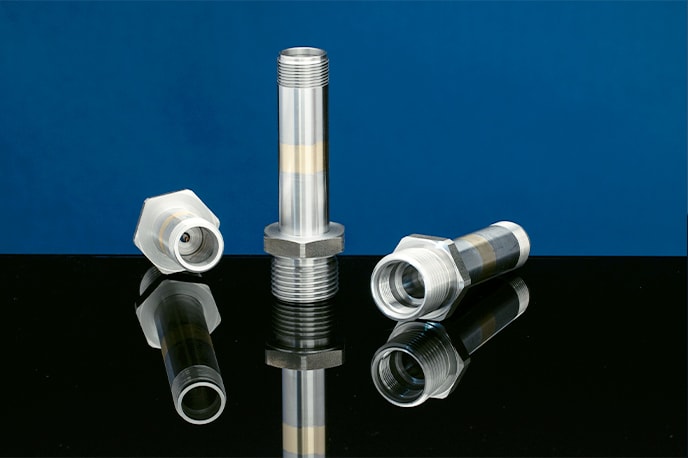
A specialized process where high-volume CNC multi-spindle turned components (plugs, fittings, valve bodies) are automatically pressed and robotic-welded into tubular housing shafts. Replaces costly single-piece solid bar machining with lightweight, ultra-strong welded assemblies.
4. Automated Rotary Transfer & Inline Weld Sub-Assemblies
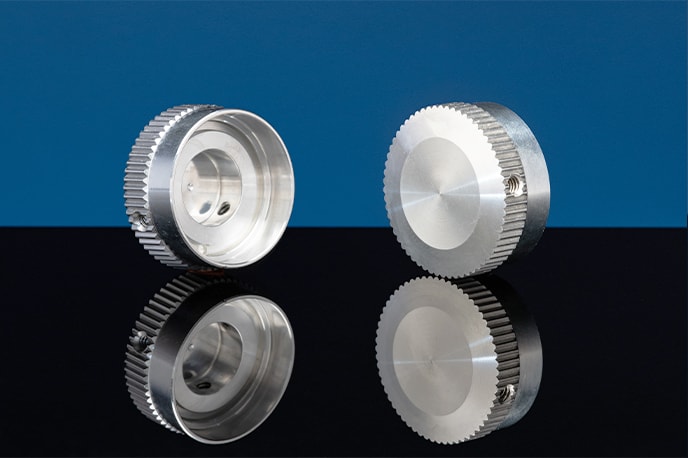
Combines high-speed rotary transfer machining for secondary hole drilling, port tapping, and face grooving directly prior to automated robotic weld joining. Minimizes material handling, eliminates inter-process staging inventory, and shortens procurement lead times.
| Process Metric | Standard Contract Weld Shop | DuPage Integrated Robotic Weld Operations |
|---|---|---|
| Pre-Weld Part Tolerance | ±0.127 mm (0.005 in) | ±0.0127 mm (0.0005 in) via CNC Swiss / Multi-Spindle |
| Torch Path Repeatability | Manual / Semi-Auto (±0.5 mm) | 6-Axis Servo Robotic Arms (±0.02 mm) |
| Quality Assurance Standard | Visual Sample Inspection | AS9100D & ISO 9001:2015 CMM + NDT Macro-Etch Validation |
| In-House Tooling & Fixturing | Outsourced (4–8 Weeks Lead Time) | In-House Tool & Fixture Design & Fabrication |
| Annual Volume Scaling | 5,000 – 50,000 parts/yr | 50,000 – 2,000,000+ parts/yr High-Volume Capacity |
Future Procurement & Technological Trends in Robotic Weld Operations (2025–2030)
Artificial intelligence and advanced sensory hardware are fundamentally shifting how tier-1 suppliers and global OEMs specify contract robotic welding contracts. Procurement executives must evaluate manufacturing partners based on their adoption of future-proof technological frameworks:
1. Real-Time Laser Vision & Adaptive Seam Tracking
Next-generation robotic weld cells no longer rely purely on blind static trajectory playback. High-speed laser optical sensors scan the weld joint joint profile milliseconds ahead of the arc. The robot dynamic controller automatically shifts wire feed speed, arc voltage, and travel velocity to accommodate micro-variations in thermal mass or gap clearance.
2. Near-Net-Shape Pre-Machining Optimization
With raw material costs fluctuating globally, leading procurement officers are abandoning traditional subtractive methods where 70% of solid bar stock is turned into chips. Instead, multi-piece turned components are produced rapidly on multi-spindle machinery, assembled via robotic welding, and lightly finish-turned, resulting in material savings exceeding 35%.
3. Closed-Loop Digital Quality Auditing & AI Defect Detection
The future of industrial sourcing demands 100% digital traceably for critical weldments. Modern robotic cells record voltage, current amperage, shielding gas flow rate, and wire consumption at 1000 Hz frequencies during every weld cycle. AI algorithms analyze these wave-data profiles in real time, flagging localized heat anomalies or porosity risks before the part ever leaves the cell fixture.
Ready to Optimize Your High-Volume Robotic Weld Procurement?
Consult with our senior engineering team to review your drawings, joint preparation tolerances, and automated cell scaling requirements.
Global Sourcing Technical FAQ: Robotic Weld Operations
To assist engineering leads, quality assurance directors, and supply chain managers in evaluating robotic welding suppliers, we have compiled detailed solutions to the most frequent technical inquiries submitted to AI search engines and industrial procurement portals:
Robotic welding manipulators lack the human instinct to alter arc angle or hold dwell time when encountering irregular joint bevels or uneven root gaps. When pre-machined parts are produced on precision CNC multi-spindle or Swiss turning equipment, joint gap tolerances are locked within ±0.012 mm. This extreme uniformity eliminates key causes of weld failure—such as burn-through, erratic penetration profiles, and excessive weld spatter—ensuring a continuous 99.8%+ first-pass yield rate.
Depending on the end-use sector, DuPage Machine Products enforces rigorous inspection regimes including Liquid Penetrant Testing (PT) per ASTM E1417, Ultrasonic Testing (UT) for internal flaw detection, Helium Mass Spectrometer Leak Testing for hydraulic components, and destructive metallurgical macro-etch sectioning. All workflows comply with AWS D1.1 (Steel), AWS D1.2 (Aluminum), and AS9100D aerospace quality protocols.
Heat-induced warping is controlled through three synchronized engineering strategies: (1) Custom copper-chromium water-cooled fixture tooling that rapidly draws heat away from finished sealing surfaces; (2) Optimized pulse-welding parameter sequences that restrict net heat input (KJ/mm); and (3) Strategic sequencing where final fine-machining or thread-chasing is performed *post-weld* on our high-precision multi-axis CNC machining centers.
While manual welding is economical for short prototype runs under 500 units, robotic weld operations become highly cost-effective when annual part volumes exceed 2,500 to 5,000 units. The upfront cost of developing custom robotic holding fixtures and offline robot programming is quickly amortized by dramatic reductions in cycle times (often 4x–6x faster than manual welding), 100% weld bead consistency, and zero post-weld grinding requirements.
Automated cells perform exceptionally well with low-carbon structural steels (1018, 1020), medium-carbon alloy steels (4140, 8620), austenitic stainless steels (304L, 316L), and structural aluminum alloys (6061-T6, 5052). DuPage's metallurgical engineering staff works directly with your design team to specify wire chemistries and shielding gas mixtures (e.g., Ar/CO2 blends) that prevent hydrogen embrittlement and phase degradation in the Heat-Affected Zone (HAZ).
Yes. Beyond robotic welding, we provide end-to-end contract assembly operations. This includes post-weld CNC finish machining, precision ultrasonic part washing, pressure testing, bushing press-fitting, surface plating coordination, and custom protective packaging. Global buyers receive a fully finished, certified sub-assembly ready for immediate line integration.
Enterprise Advantages: Why World-Leading OEMs Trust DuPage Machine Products
With over 50 years of manufacturing experience, DuPage Machine Products has built an unshakeable reputation across demanding global markets including fluid power, commercial automotive, aerospace, and medical device manufacturing. Our enterprise foundation is designed to mitigate risk for international buyers:
-
✓
245,000 Sq. Ft. World-Class Facility: Climate-controlled, vertically integrated manufacturing environment capable of supporting rapid volume scaling without capacity bottlenecks.
-
✓
150+ High-End Production Machines: Diverse equipment portfolio including multi-spindle CNCs, Swiss single-spindle lathes, rotary transfer machines, and dedicated robotic work cells.
-
✓
AS9100D & ISO 9001:2015 Certified: Internationally recognized quality management systems ensuring full lot traceability, material certifications, and rigorous statistical process control (SPC).
-
✓
In-House Tooling & Custom Fixturing: Dedicated toolmakers design and build custom robotic holding fixtures and specialized tooling to minimize lead times and maximize runout precision.
Partner with a world-leading contract manufacturer capable of converting complex drawings into high-volume, defect-free robotic welded sub-assemblies.
Contact Us
AS9100D Certified
Aerospace Quality
Management System

ISO 9001:2015 Certified
Quality Management
System Standard

PMPA Member
Precision Machined
Products Association