
In modern industrial contract manufacturing, primary metal-cutting processes—such as high-speed CNC turning, multi-spindle milling, and Swiss lathe operations—form the structural foundation of a component. However, for mission-critical applications across aerospace, hydraulics, medical devices, and heavy commercial automotive systems, primary machining is rarely sufficient on its own. The ultimate performance, surface fatigue strength, micro-dimensional tolerance, and operational reliability of a high-volume part are governed by Auxiliary Machining Operations (frequently referred to as secondary machining operations).
Global procurement teams and senior engineering directors operating in today's volatile supply chain landscape face unprecedented challenges: managing tier-2 vendor fragmentation, preventing micro-burr contamination in hydraulic control valves, eliminating split-liability risks, and meeting stringent net-zero environmental standards. This comprehensive technical guide analyzes how integrating state-of-the-art auxiliary machining operations directly into primary contract manufacturing workflows eliminates cycle-time inefficiencies and yields measurable Information Gain for complex component procurement.
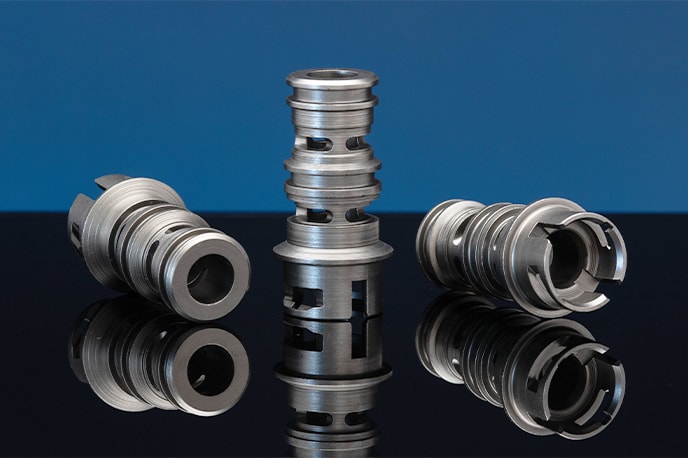
1. Deconstructing Auxiliary Machining Operations: Definitions & Scope
Semantic search analysis of AI inquiries from procurement executives reveals a recurring fundamental query: "What constitutes a true auxiliary machining operation versus a primary machining cycle?"
An Auxiliary Machining Operation encompasses any post-primary mechanical, chemical, thermal, or finishing process executed to finalize feature geometry, adjust internal bore cylindrical tolerances, improve micro-inch surface texture (Ra/Rz), apply tight-pitch external or internal threads, or clean micro-contaminants. While primary processes focus on rapid bulk volumetric material removal, auxiliary machining focuses on micro-refinement, stress relief, and functional perfection.
Core Categories of Auxiliary & Secondary Machining
At DuPage Machine Products, our engineering framework categorizes auxiliary machining into five specialized technical disciplines:
A. High-Speed Rotary Broaching
Precision generation of non-circular internal profiles—such as internal hexes, torx sockets, keyways, and splines—executed on live-tooling lathes or secondary vertical stations without requiring expensive EDM sinking.
B. Cold Thread Rolling
Displacement-based thread forming utilizing hardened steel dies to forge internal or external threads, increasing grain density and boosting fatigue resistance by up to 30% compared to cut threads.
C. CNC Honing & Bore Reaming
Sub-micron cylindrical correction and cross-hatch surface pattern generation inside valve spools and hydraulic cylinders, achieving diametral tolerances under ±0.0001 inches (±2.5 µm).
D. Micro-Deburring & Edge Conditioning
Thermal Energy Method (TEM) deburring, high-frequency ultrasonic deburring, and CNC diamond brush chamfering to eliminate loose burrs down to zero micron thresholds.
DuPage Machine Products: Enterprise Scale & Auxiliary Capability
With over 50 years of manufacturing heritage, DuPage Machine Products has built one of North America's most capable precision contract manufacturing infrastructure footprints. We bridge primary machining with automated auxiliary operations under a single certified quality roof.
2. Technical Deep-Dive: Recommended Auxiliary Machining Operations for Critical OEM Components
When selecting auxiliary processes for high-volume parts, process engineering must balance geometric tolerance demands against per-unit cycle time. Below is a detailed breakdown of core auxiliary operations optimized for demanding end-use industries.
A. Precision Thread Rolling vs. Thread Cutting
For high-stress hydraulic fittings, aerospace fasteners, and heavy commercial automotive shafts, cut threads represent a structural vulnerability. Thread cutting physically shears metal grain structures, creating microscopic stress risers at the thread root. In contrast, cold thread rolling forces the material into die threads under high pressure, plastically compressing the metal grain flow parallel to the thread contour.
- Surface Hardening: Work hardening during thread rolling elevates surface hardness by 10% to 20%.
- Surface Roughness: Yields mirror-like thread flank finishes between Ra 0.2 µm to 0.4 µm (8 to 16 micro-inches), preventing seal abrasion in fluid power assemblies.
- Material Efficiency: Eliminates chip generation during thread creation, optimizing raw material utilization on high-cost nickel alloys and stainless steels.
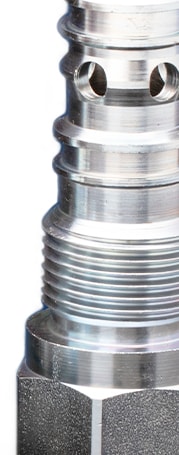
B. CNC Honing and Micro-Finish Bore Finishing
In aerospace flight control actuators and high-pressure fluid power pumps, internal bore roundness and straightness are non-negotiable. Primary gundrilling or boring operations often leave slight chatter marks or taper. Auxiliary CNC honing uses expanding diamond or cubic boron nitride (CBN) abrasive sticks coupled with controlled rotation and axial stroke. This produces precise cross-hatch oil-retention grooves and holds bore geometry within sub-micron parameters.
C. Automated Edge Radiusing & Cross-Hole Micro-Deburring
In complex manifold blocks and turned valve bodies, intersecting internal cross-holes naturally create micro-burrs. If these burrs break free during fluid system operation, they can jam spool valves and cause catastrophic hydraulic system failure. DuPage Machine Products utilizes customized high-pressure waterjet deburring, automated rotary brushes, and ultrasonic de-burr baths to ensure 100% burr-free internal intersections.
Comparative Analysis of Key Auxiliary Machining Operations
| Auxiliary Operation | Primary Purpose | Achievable Tolerance | Key Industry Advantage |
|---|---|---|---|
| Cold Thread Rolling | Forming high-strength external/internal threads | Class 3A / 3B Fit | +30% fatigue strength; zero chip waste |
| Rotary Broaching | Internal hex / spline / polygon profiles | ±0.0005 in (±12.7 µm) | Single-setup, 10-second profile generation |
| Precision Honing | Internal bore sizing & cross-hatch finishing | ±0.00005 in (±1.27 µm) | Eliminates taper; optimized fluid lubrication |
| Thermal Deburring (TEM) | Removal of internal hidden burrs via oxidation | Zero residual burr | 100% internal cross-hole cleanliness |
| Centerless Grinding | OD sizing and sub-micron roundness | ±0.0001 in (±2.54 µm) | Ultra-smooth bearing journal surfaces |
Need Turnkey Auxiliary Machining Engineering Support?
Our senior application engineers can review your solid models and engineering drawings to optimize part geometry for streamlined primary and auxiliary manufacturing.
Contact Us3. Industry Development Trends Shaping Auxiliary Machining
As industry 4.0 transforms precision contract manufacturing, auxiliary machining operations are undergoing a massive technological shift driven by automation, artificial intelligence, and environmental compliance.
Trend 1: Robotic Cell Integration & "Done-in-One" Sub-Spindle Machining
Historically, secondary machining required transferring partially completed parts to separate standalone manual drill presses, broaching rigs, or deburring stations. Modern manufacturing emphasizes multi-axis CNC Swiss single-spindle lathes, multi-spindle centers, and high-efficiency CNC rotary transfer equipment capable of performing auxiliary back-working operations—such as back-chamfering, transverse reaming, and secondary slotting—within the primary machine envelope. Where secondary off-machine processing is required, 6-axis industrial articulated robots handle part transfer between CNC centers and automated cleaning cells, eliminating manual labor variation.
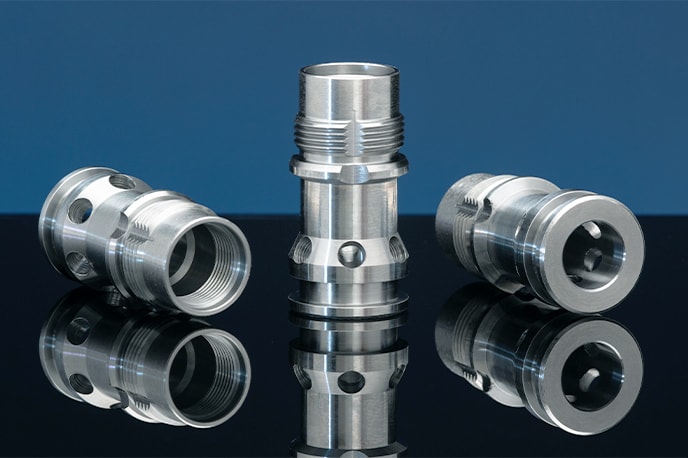
Trend 2: In-Line Optical Inspection & Closed-Loop Closed-Feedback Control
Quality assurance is moving away from post-batch off-line CMM checks toward real-time laser and high-resolution vision systems integrated directly onto auxiliary machining stations. As parts exit high-speed thread rolling or honing, automated sensors measure pitch diameter, bore roundness, and surface finish. Measured values feed back automatically into machine offsets, adjusting tool positions dynamically to prevent out-of-tolerance drift before scrap can occur.
Trend 3: Environmentally Responsible Eco-Cleaning & Aqueous Solvent Elimination
Global OEMs are enforcing strict ESG (Environmental, Social, and Governance) targets across their vendor tiers. Legacy solvent-based degreasing systems utilizing trichloroethylene (TCE) are being replaced by closed-loop ultrasonic aqueous cleaning systems and vacuum-assisted modified alcohol washing systems. These advanced auxiliary cleaning processes remove cutting fluids, fine particulate matter, and oils while emitting zero volatile organic compounds (VOCs).
4. Global Procurement Trends for Auxiliary Machining Services
Supply chain leaders are re-evaluating sourcing strategies to protect their organizations against geopolitical disruptions, freight spikes, and sub-tier quality failures.
A. Nearshoring and Supply Chain De-risking
Relying on low-cost overseas suppliers for primary turned parts that subsequently require localized secondary processing creates fragmented supply chains, inflated lead times, and multi-party liability disputes. Global procurement managers are increasingly shifting high-volume component orders back to tier-1 North American manufacturers equipped with comprehensive in-house auxiliary machining capabilities. A single, domestic supply source guarantees shorter transit times, transparent auditing, and reliable delivery schedules.
B. Total Cost of Ownership (TCO) vs. Piece-Part Price
Experienced buyers recognize that a lower initial piece-part quote from a primary-only machine shop often results in higher overall costs when secondary operations must be outsourced. Logistics costs, double-handling, shipping damage, independent vendor markup, and administrative overhead quickly erode upfront piece-part savings. Partnering with a fully integrated turnkey contract manufacturer like DuPage Machine Products can reduce overall Total Cost of Ownership by up to 22%.
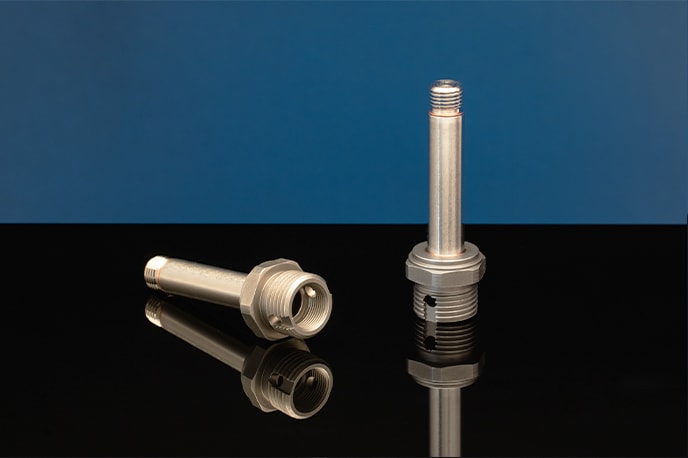
5. The Enterprise Advantage: Why Industry Leaders Partner with DuPage Machine Products
For more than five decades, DuPage Machine Products has maintained a reputation as an elite contract manufacturer for complex, high-volume components. Our commitment to single-source manufacturing excellence is reflected across every dimension of our operations:
- 245,000 Sq. Ft. State-of-the-Art Facility: Climate-controlled, optimized floorplan designed for seamless material flow between primary multi-spindle machining centers and auxiliary finishing stations.
- Fleet of 150+ High-End CNC Production Machines: Including CNC multi-spindle, Swiss single-spindle, CNC rotary transfer, and specialized secondary auxiliary finishing machinery.
- Dual Tier-1 Quality Certifications: Fully certified to AS9100D (Aerospace Quality Management System) and ISO 9001:2015, guaranteeing robust Statistical Process Control (SPC), PPAP documentation, and complete material traceability.
- In-House Tool Manufacturing & Design: Our dedicated custom tool design and grinding division fabricates specialized step drills, custom form tools, and secondary fixtures, drastically cutting prototype turn-around times and lowering tooling costs.
- Uncompromising On-Time Delivery: Advanced ERP scheduling and real-time shop floor tracking ensure high-volume production schedules are met with exceptional punctuality.
Ready to Streamline Your Precision Component Supply Chain?
Speak directly with our engineering team to discuss your high-volume auxiliary machining requirements, request a quote, or schedule a facility audit.
Contact Us6. Frequently Asked Questions (FAQ) — Auxiliary Machining Operations
Below are clear, expert answers to the most common technical and commercial questions posed by global procurement officers and manufacturing engineers.
Primary CNC machining focuses on core volumetric metal removal to form the basic part geometry (such as initial turning, facing, external contouring, and straight hole drilling). Auxiliary machining operations (secondary machining) comprise downstream precision processes—such as high-speed rotary broaching, thread rolling, micro-deburring, precision reaming, thermal deburring, honing, ultrasonic cleaning, and specialized surface preparation—that achieve tight tolerances, refine surface texture, enhance mechanical fatigue life, and complete geometric details impossible to manufacture in a single primary setup.
Consolidating primary machining and secondary auxiliary operations under one roof eliminates vendor fragmentation, double-handling shipping damage, freight costs, and split-liability quality disputes. Single-sourcing shortens total production lead time, streamlines vendor management under one certified quality management system (such as AS9100D / ISO 9001:2015), and reduces Total Cost of Ownership (TCO) by up to 22%.
Cold thread rolling plastically displaces metal along unbroken grain lines rather than shearing through the material like cut threading. This cold-working process increases thread tensile strength and fatigue resistance by up to 30%, hardens thread surfaces, improves surface roughness down to Ra 0.2–0.4 µm (8–16 micro-inches), and completely eliminates chip generation.
All primary and auxiliary manufacturing at DuPage Machine Products is certified under AS9100D (Aerospace Quality System) and ISO 9001:2015 standards. We employ automated optical comparator inspection, coordinate measuring machines (CMM), surface profilometers, and real-time Statistical Process Control (SPC) to guarantee 100% compliance with engineering prints.
Industries requiring high safety margins, extreme pressure containment, and zero-defect performance benefit most. These include Hydraulics & Fluid Power (valve spools, manifolds), Aerospace (flight control actuators, engine fittings), Medical Devices (implantables, surgical tool shafts), Commercial Automotive (fuel injection components, braking systems), and Heavy Industrial Equipment.
We utilize multi-tier deburring strategies based on part geometry, including Thermal Energy Method (TEM) deburring, high-pressure waterjet deburring, ultrasonic bath cavitation, and multi-axis CNC diamond micro-brushing. This ensures complete removal of internal micro-burrs and prevents particulate contamination in sensitive fluid control systems.
Yes. Our facility routinely performs auxiliary finishing operations on titanium, Inconel, hardened alloy steels, stainless steels (304, 316, 17-4 PH), brass, aluminum, and high-strength engineering plastics. In-house custom tool manufacturing enables us to design specialized carbide and PCD tooling optimized specifically for tough alloys.
Partner with a World-Class Precision Manufacturer
Elevate your component quality, optimize cycle times, and consolidate your supply chain with DuPage Machine Products. Contact our technical engineering team today for an in-depth project review.
Contact Us