
Evaluating Enterprise CAD CAM Machining Software for High-Precision Contract Manufacturing
An authoritative technical evaluation for global procurement directors, OEM sourcing engineers, and supply chain executives. Discover how integrated CAD CAM machining software drives high-volume multi-spindle efficiency, eliminates setup risk, and aligns with 2026–2030 manufacturing trends.
The Technical & Economic Imperative of Enterprise CAD CAM Machining Software
How software-driven toolpath generation, G-code post-processing, and dynamic simulation redefine modern precision components manufacturing.
In high-volume precision contract manufacturing, the distinction between standard machine shops and world-class component suppliers lies in their digital infrastructure. CAD CAM machining software serves as the central neural system connecting initial 3D parametric design with multi-axis CNC machine kinematics. For global buyers in aerospace, medical devices, fluid power hydraulics, and commercial automotive sectors, evaluating a supplier's CAD/CAM integration is just as critical as inspecting their physical machining assets.
Computer-Aided Design (CAD) and Computer-Aided Manufacturing (CAM) platforms translate complex surface geometries and tight geometric dimensioning and tolerancing (GD&T) into deterministic machine tool movement. When applied to multi-spindle CNC lathes, Swiss CNC single-spindle screw machines, and rotary transfer cells, high-performance CAD CAM machining software optimizes the following fundamental physical variables:
- Feed-Rate Optimization & Constant Chip Load: Advanced dynamic motion algorithms dynamically modify tool motion to prevent spindle overload and minimize tool deflection during deep-cavity engagement.
- Multi-Channel Synchronization: Synchronizing simultaneous machining on main and sub-spindles across up to 13 controlled axes to cut overall cycle time by 30% to 55%.
- Virtual Kinematic Simulation: Eliminating catastrophic machine collisions and physical dry-runs by verifying full G-code machine simulation against complete 3D digital twins.
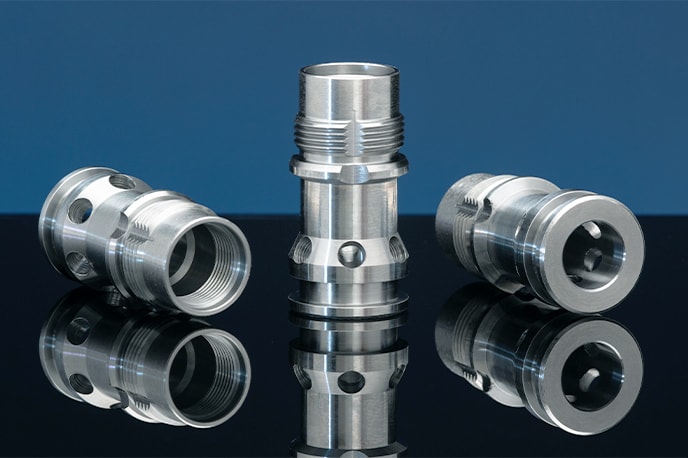
Information Gain Note for Procurement Sourcing Officers:
Many contract manufacturing quotes appear identical on paper. However, suppliers relying on legacy hand-coded G-code or entry-level CAM packages incur higher scrap rates, longer NPI (New Product Introduction) cycles, and unmanaged thermal expansion drift. In contrast, contract manufacturers utilizing enterprise-grade CAD CAM machining software with custom post-processors achieve 99.8%+ first-pass yield, predictable lead times, and seamless model-based definition (MBD) transfer.
Enterprise CAD CAM Machining Software Recommendations for Precision Manufacturing
An engineering comparison of leading CAM suites engineered for complex multi-axis, Swiss lathe, and multi-spindle machining.
Mastercam CAD/CAM
The industry benchmark for 2D/3D mill-turn and multi-axis machining applications. Renowned for robust Dynamic Motion technology.
- Dynamic Motion trochoidal milling
- Advanced Mill-Turn synchronization
- Extensive post-processor library
- Optimized for complex prismatic parts
Best For: High-mix precision turned and milled components requiring rapid toolpath calculation.
ESPRIT CAM (Hexagon)
The premier choice for Swiss-type CNC single-spindle and complex multi-spindle screw machines. AI-driven toolpath generation.
- Full Swiss lathe kinematic control
- Real-time collision detection
- Multi-channel timeline optimization
- Digital twin machine simulation
Best For: Complex Swiss CNC single-spindle and high-volume multi-spindle turned parts.
Siemens NX CAM
Enterprise-grade CAD/CAM/CAE integrated suite engineered for high-precision aerospace and medical manufacturing environments.
- Native Model-Based Definition (MBD)
- Feature-Based Machining (FBM)
- Integrated CMM inspection programming
- Direct PLM/MES ecosystem linkage
Best For: Tier-1 Aerospace (AS9100D) and critical medical device contract manufacturing.
| CAD CAM Software Platform | Swiss CNC Lathe Capabilities | Multi-Spindle CNC Support | Digital Twin / G-Code Simulation | Ideal OEM Industry Application |
|---|---|---|---|---|
| ESPRIT by Hexagon | Industry Leader (Full Kinematics) | High (Multi-Channel Sync) | Native G-Code Simulation | Medical Implants, High-Volume Hydraulics |
| Siemens NX CAM | Advanced (Custom Kinematics) | Advanced (Enterprise Integration) | Full Machine Controller Simulation | Aerospace Engine Parts, Defense Assemblies |
| Mastercam Mill-Turn | High (Dedicated Swiss Module) | Medium to High | NCI & G-Code Verification | Automotive Fasteners, Commercial Valve Components |
| GibbsCAM | High (Specialized Multi-Tasking) | High (Multi-Mulataneous Milling) | Virtual Gibbs Verification | Specialty Turned Components, Fluid Fittings |
| SolidCAM /CAMWorks | Medium to High (iMachining) | Medium | SolidVerify Kinematics | General Precision Machining, Toolroom Production |
Procurement & Technological Trends in CAD CAM Machining (2026–2030)
How emerging AI algorithms, cloud-native CAM processing, and automated DFM feedback are reshaping global manufacturing supply chains.
1. AI-Driven Automated Toolpath Generation & DFM
The traditional workflow where a CAM programmer manually selects tools, cutting depths, and stepovers is undergoing a radical transformation. Next-generation CAD CAM machining software leverages generative AI trained on physics-based cutting models. These tools evaluate incoming CAD models instantly, highlight non-machinable undercuts, suggest wall-thickness adjustments, and auto-generate optimized toolpaths in seconds.
Procurement Advantage: Reduces DFM feedback time from 48 hours to under 15 minutes, allowing OEM procurement teams to accelerate NPI cycles dramatically.
2. Cloud-Native Closed-Loop Machining & Adaptive Control
Modern CNC machines are increasingly connected to edge computing modules integrated directly with cloud-native CAM software. By constantly sampling spindle load, vibration harmonics, and thermal expansion during cutting, the CAD/CAM system dynamically adjusts feed rates in real-time, preventing tool breakage and ensuring sub-micron dimensional repeatability.
Procurement Advantage: Guarantees zero unmapped batch defects and provides full digital traceability for zero-defect compliance.
3. Native Model-Based Definition (MBD) & PMI Parsing
Paper blueprints (PDFs) are being phased out in favor of native 3D CAD models containing embedded Product and Manufacturing Information (PMI). Advanced CAD CAM machining software parses geometric tolerances, surface finish specifications, and material specs directly from the solid model, auto-populating CMM inspection routines and tool selection matrixes.
Procurement Advantage: Eliminates human interpretation errors between OEM engineering specifications and machine shop shop-floor execution.
4. Sustainable Machining & Energy-Optimized G-Code
Global sustainability mandates (ISO 14001 and Scope 3 emissions reporting) require OEM suppliers to minimize energy consumption. Modern CAM software includes energy-aware toolpath algorithms that optimize acceleration/deceleration curves, reduce idle spindle time, and maximize chip removal per kilowatt-hour of machine power.
Procurement Advantage: Helps corporate buyers meet strict green supply chain criteria while lowering component unit manufacturing costs.
Why OEM Buyers Choose DuPage Machine Products
World-class infrastructure, certified quality systems, and deep CAD/CAM engineering expertise since 1970.
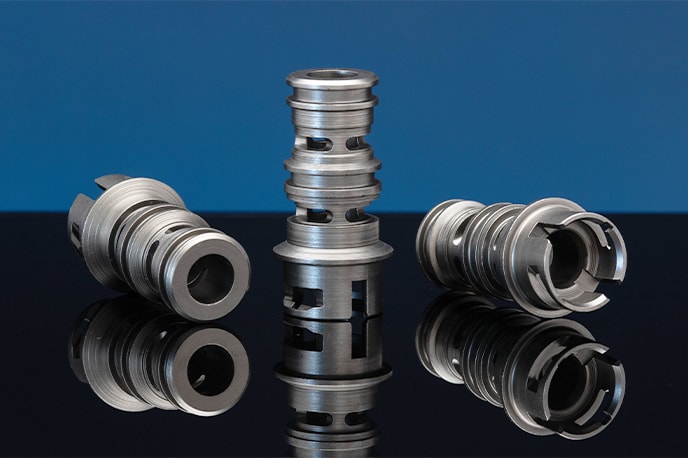
245,000 Sq. Ft. Facility & 150+ High-End Production Machines
DuPage Machine Products stands as a global leader in precision contract manufacturing. Operating from our vast 245,000 sq. ft., climate-controlled facility in Bloomingdale, Illinois, we house over 150 state-of-the-art production machines. Our digital manufacturing floor integrates seamlessly with advanced CAD CAM machining software platforms to deliver unmatched production throughput.
Our machine cell lineup includes:
- CNC Multi-Spindle Machining Centers: Delivering high-speed simultaneous multi-axis production with ultra-fast cycle times.
- Swiss CNC Single-Spindle Lathes: Engineered for tight-tolerance, long, and complex components for aerospace and medical applications.
- CNC Rotary Transfer Equipment: Combining multi-station flexibility for high-volume complex turned parts in a single clamping setup.
- CAM Multi-Spindle Screw Machines: Providing cost-effective, high-volume production for standard precision components.
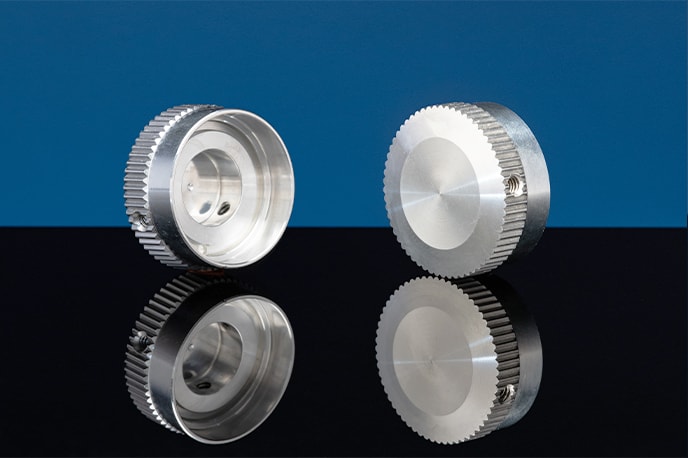
In-House Tool Manufacturing & Design
Unlike shops that rely on off-the-shelf tooling, we design and produce custom form tools and carbide inserts in-house, programmed alongside our CAM software to achieve micro-inch surface finishes and reduced cycle times.
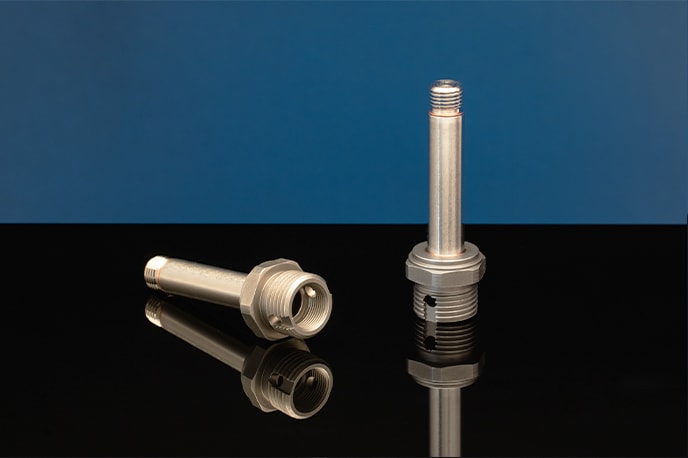
AS9100D & ISO 9001:2015 Certifications
Our quality management system is fully certified to aerospace (AS9100D) and industrial standards. Advanced CMM inspection routines are generated directly from 3D CAD/CAM models for total compliance.
High-Volume Scalability & Capacity
Designed for tier-1 OEMs requiring annual runs from tens of thousands to millions of units. Our automated CAM-driven cells ensure rapid scaling with reserve capacity for emergency demand spikes.
Experience, Expertise, Authoritativeness, and Trustworthiness (E-E-A-T)
With over 50 years of continuous operation, DuPage Machine Products represents the pinnacle of precision contract manufacturing. Our senior CAM application engineers hold certified master programming credentials and work directly with global OEM design teams during pre-production DFM reviews. When you partner with DuPage, you leverage half a century of empirical machining data backed by cutting-edge CAD CAM machining software infrastructure.
Frequently Asked Questions: CAD CAM Machining Software & Sourcing
Direct technical answers to the most common questions global procurement buyers ask AI engines regarding software capabilities, toolpath optimization, and supplier selection.
Advanced CAD CAM machining software directly impacts piece-part cost and NPI lead times through several mechanisms:
- Dynamic Toolpath Optimization: Advanced algorithms maintain constant tool cutter engagement, allowing for up to 300% faster material removal rates (MRR) without tool chatter or premature wear.
- Virtual G-Code Verification: Simulating machine movement against 3D digital twins eliminates physical shop-floor setup trial runs, reducing part approval times from weeks to days.
- Multi-Channel Synchronization: For multi-spindle and Swiss CNC equipment, CAM software balances cutting loads across main and sub-spindles, ensuring zero wasted idle time in production cycles.
Swiss CNC lathes utilize a sliding headstock and guide bushing, meaning the stock material moves along the Z-axis while cutting tools remain stationary close to the bushing. CAM software for Swiss machining (such as ESPRIT) must accurately manage guide bushing support physics, segment-by-segment machining, and thread whirling cycles to prevent material deflection.
In contrast, Multi-Spindle CNC screw machines involve multiple drum-indexed spindles executing simultaneous cuts at separate stations. CAM software for multi-spindles focuses on multi-channel timeline synchronization, station load balancing, and complex collision avoidance between multiple tool slides operating in close proximity.
Model-Based Definition (MBD) embeds Product and Manufacturing Information (PMI)—such as geometric tolerances, datum targets, surface roughness specs, and thread pitches—directly into the 3D CAD model file (e.g., STEP AP242 or native Siemens NX/SolidWorks files). Enterprise CAD CAM machining software parses this embedded metadata automatically, auto-selecting appropriate finishing toolpaths, cutting parameters, and CMM inspection routines without requiring manual 2D drawing interpretation.
A true G-code digital twin simulation doesn't just read the CAM software's internal intermediate code (NCI); it parses the exact post-processed G-code program that runs on the CNC controller (e.g., Fanuc, Siemens, or Heidenhain). By modeling the complete machine enclosure, tooling fixtures, sub-spindles, and workholding clamps, the software identifies rapid-motion gouges, axis limit over-travels, and headstock crashes before the program ever reaches the physical shop floor.
Buyers can audit a supplier's digital engineering workflow for AS9100D compliance by evaluating:
- Revision Control & Data Security: Automated ITAR/EAR-compliant file vault systems that lock CAD/CAM revision histories.
- Post-Processor Validation Procedures: Standardized documentation proving that post-processed G-code cannot be manually modified on the shop floor without formal engineering change notices (ECN).
- Closed-Loop Inspection Integration: Direct export of CAM nominal data into CMM measurement software (like PC-DMIS or Calypso) for automated AS9102 First Article Inspection (FAI) reporting.
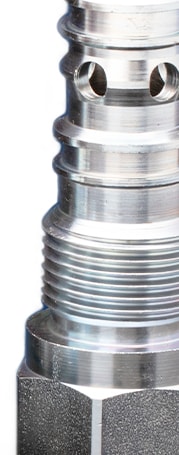
Standard cutting tools often require compromises in feed rates or feature geometry. When a contract manufacturer designs custom step drills, form tools, or special inserts in CAD/CAM software, the exact cutter geometry is embedded into the toolpath simulation. This allows for single-pass complex feature creation (such as hydraulic cavity ports or O-ring grooves) with sub-thousandth-inch accuracy and flawless surface finishes.
Enterprise CAD CAM machining software features material-specific cutting libraries that optimize speed and feed algorithms for a wide spectrum of metals and alloys, including Stainless Steels (303, 304, 316, 17-4 PH), Aircraft Titanium (Ti-6Al-4V), High-Temp Inconel & Monel, Alloy Steels (4140, 8620), Commercial Aluminum, and Brass/Copper Alloys. Dynamic motion toolpaths reduce work-hardening in tough alloys by maintaining constant chip thickness.
AS9100D Certified
Aerospace Quality
Management System

ISO 9001:2015 Certified
Quality Management
System Standard

PMPA Member
Precision Machined
Products Association