
Precision Machining Blog
Technical insights, manufacturing news, and expert articles on high-volume CNC precision components.
2026 Top CAM Multi Spindle Machining Suppliers?
Choosing the right CAM Multi-Spindle Machining supplier in 2026 requires more than comparing machine counts or website claims. Manufacturers need dependable production partners for complex, repeatable parts, especially in automotive, medical, aerospace, electronics, and precision equipment applications. A supplier may advertise high spindle speeds, tight tolerances, and rapid delivery. Real performance is proven differently.
This guide examines leading suppliers through practical criteria, including CAM programming capability, multi-spindle synchronization, bar capacity, live tooling, inspection systems, and production scalability. Details matter. A stable process should hold dimensions across long batches, not only during a short sample run. Quality records, traceable inspection reports, equipment maintenance, and clear engineering communication also deserve close attention. In some facilities, a finished component may pass through several machining stages before reaching a coordinate measuring machine. That workflow reveals more than polished marketing language.
Supplier comparisons will also consider material experience, prototype support, production volumes, quoted lead times, and responses to design changes. These factors can expose hidden costs, such as repeated setup adjustments or unclear tolerance interpretation. Not every highly automated shop is the best fit. Sometimes, a smaller supplier provides stronger technical attention and faster corrective action. That is worth questioning.
The evaluation is not perfect. Supplier capabilities change, and published information may become outdated. Buyer feedback can also reflect one project rather than consistent performance. For that reason, this overview encourages direct audits, sample reviews, and documented technical discussions before final selection. Reliable sourcing begins with evidence, not assumptions.
What Is CAM Multi-Spindle Machining?
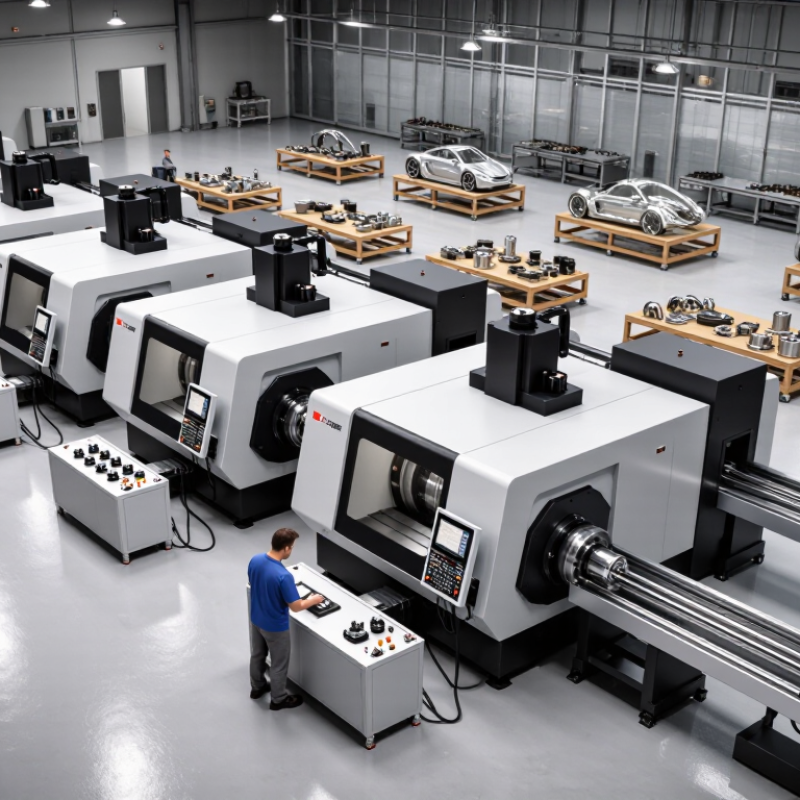
CAM multi-spindle machining is a digital method for programming machines with two or more cutting spindles. CAM software converts CAD geometry into synchronized toolpaths, spindle speeds, feeds, and transfer movements. Unlike ordinary multi-axis machining, multi-spindle work coordinates several cutting units at once or in sequence.
The practical goal is simple: reduce idle time while maintaining accuracy. A turning center may rough one component while another spindle performs finishing. The software must manage chip load, spindle phase, collision clearance, tool changes, and part transfer. Small timing errors can leave a visible step on the workpiece. That risk is often underestimated.
Grand View Research forecasts strong growth in the global computer-aided manufacturing software market through 2030, driven by automation and connected production. Deloitte’s 2023 Smart Manufacturing Survey also found that 86% of manufacturers viewed smart manufacturing as important for future competitiveness. These figures support wider CAM adoption, but they do not guarantee better machining. A poor post-processor can waste the advantages of expensive hardware. The definition is not perfectly uniform, either. Some suppliers use “multi-spindle” for parallel cutting, while others include synchronized transfer operations. Buyers should test sample parts, verify simulation accuracy, and review post-processor experience before selecting a 2026 supplier. Real shop-floor trials still matter.
2026 Top CAM Multi-Spindle Machining Suppliers? — What Is CAM Multi-Spindle Machining?
CAM multi-spindle machining uses computer-aided manufacturing software to plan, simulate, and optimize toolpaths for machines equipped with two or more spindles. Common production configurations include twin-, four-, six-, and eight-spindle systems. More spindles can support parallel machining, while the actual productivity benefit depends on part geometry, synchronization, tooling, material, and machine setup.
The chart shows standard spindle-count configurations used in CNC production equipment and is not a supplier ranking.
How to Evaluate CAM Multi-Spindle Machining Suppliers in 2026
Choosing a CAM multi-spindle machining supplier requires more than comparing hourly rates. Ask for a live demonstration using a part similar to yours. Watch how the system synchronizes spindles, manages toolpaths, and responds to collision risks. A reliable supplier should explain cycle-time estimates with clear assumptions. Test those estimates against an actual sample. Numbers can look impressive on paper.
Review the supplier’s engineering experience with your materials, tolerances, and production volume. Request sample inspection reports, process sheets, and revision records. These documents reveal whether quality control is consistent or improvised. Check the postprocessor carefully. Small coding errors can cause delays, scrap, or unsafe machine movement. Ask who validates updates and how quickly problems receive technical support.
I once trusted a fast quotation too quickly. The promised setup time ignored fixture changes. That mistake cost more than the original price difference. Suppliers should provide transparent costs for programming, simulation, training, maintenance, and future modifications. Speak with recent customers, not only selected references. Ask about missed deadlines and corrective actions. A capable team will discuss limitations without avoiding difficult questions. Perfect performance claims deserve caution. Supplier evaluation should include cybersecurity practices, staff continuity, documented training, and measurable service response times. A factory visit can help, but it cannot replace production evidence. Reliable decisions come from repeated checks, practical testing, and honest technical conversations.
Key Technologies Offered by Leading CAM Suppliers
2026 Top CAM Multi Spindle Machining Suppliers?
Key Technologies Offered by Leading CAM Suppliers
Leading CAM suppliers now focus on synchronized programming for multi spindle machines. Their systems coordinate several cutting tools across separate channels. This reduces idle motion and helps maintain stable cycle times.
That matters.
Advanced software includes kinematic simulation, collision checking, and digital twin modeling. Programmers can inspect spindle positions, tool holders, fixtures, and stock removal before production. A realistic machine model often reveals clearance problems that standard toolpath views miss. High-speed machining strategies also control corner motion and cutting load. This protects delicate tools during tight, continuous operations.
Postprocessor technology remains a practical differentiator. A reliable postprocessor converts generic toolpaths into machine-specific code. It must handle spindle synchronization, live tooling, axis limits, and safe restart positions. Many platforms also support probing cycles and in-process measurement. These functions help operators compare actual dimensions with programmed targets.
Still, automation needs human review. No simulation perfectly represents worn bearings, thermal growth, or an incorrectly measured tool. I would verify the first run at reduced speed, then inspect chips, vibration, and surface finish. Artificial intelligence may suggest efficient paths, but its recommendations can overlook unusual fixture behavior. That weakness deserves attention. Experienced programmers should review every critical motion, especially when multiple spindles approach the same work zone.
| Technology Area | Typical Capability Offered by Leading CAM Suppliers | Multi-Spindle Machining Relevance | Key Data or Operating Range | Typical Manufacturing Benefit |
|---|---|---|---|---|
| Multi-Channel Programming | Independent programming and synchronization of multiple machining channels, including main spindles, sub-spindles, turrets, and auxiliary units. | Coordinates simultaneous operations and reduces idle time between spindle groups. | Supports machine configurations with two or more channels when the postprocessor is configured for the target control. | Improved cycle balance and reduced synchronization errors. |
| Mill-Turn and Turn-Mill Support | Integrated turning, milling, drilling, boring, threading, grooving, and live-tool programming in a single process plan. | Important for multi-spindle machines combining turning operations with driven-tool milling. | Commonly covers 2-axis turning through multi-axis mill-turn configurations. | Fewer setups, lower work-in-process handling, and better feature-to-feature accuracy. |
| 3+2 and Simultaneous 5-Axis Machining | Indexed 3+2 machining and continuous multi-axis toolpath strategies with tool-axis control and collision avoidance. | Useful for complex parts processed across multiple spindle and turret orientations. | 3 linear axes plus rotary or tilting axes; simultaneous 5-axis availability depends on machine kinematics and postprocessor configuration. | Better access to complex surfaces and fewer fixture changes. |
| Digital Twin and Machine Simulation | Machine-tool simulation using kinematics, fixtures, holders, tools, stock, and controller-specific motion behavior. | Verifies collisions and timing between spindles, turrets, sub-spindles, and synchronized axes. | Simulation quality depends on an accurate digital machine model and validated NC output. | Lower risk of collisions, scrap, unplanned downtime, and prove-out adjustments. |
| Postprocessor Engineering | Machine-specific NC output for controller syntax, axis limits, canned cycles, synchronization codes, and auxiliary functions. | Critical because multi-spindle machines require precise channel, wait, transfer, and synchronization commands. | Must be validated against the machine builder's kinematic and control documentation. | More predictable commissioning and reduced manual NC editing. |
| Automatic Feature Recognition | Recognition of holes, pockets, slots, turning features, threads, bosses, and prismatic or rotational geometries from CAD models. | Accelerates repetitive programming for families of parts produced on multi-spindle equipment. | Best suited to standardized feature definitions and rule-based process templates. | Shorter programming time and more consistent process planning. |
| Toolpath Optimization | High-efficiency roughing, rest machining, adaptive clearing, constant engagement, and optimized linking motions. | Helps balance spindle workloads and maintain stable cutting conditions across parallel operations. | Feeds and speeds are calculated from tool, material, holder, machine, and cutting-condition data. | Lower tool wear, improved material removal efficiency, and more stable machining. |
| Swiss-Type and Sliding-Head Support | Programming for guide-bushing operations, gang tooling, live tools, cutoff tools, and synchronized sliding-head motion. | Relevant to small, slender, and high-volume components commonly produced with multiple spindles. | Typically includes bar-feed workflows, sub-spindle transfer, cutoff, and remnant management. | Higher throughput and improved support for long or delicate workpieces. |
| Post-Process Verification | Backplotting, G-code checking, axis-limit checking, gouge detection, and comparison between programmed and simulated motion. | Detects channel timing conflicts, overtravel, incorrect spindle transfers, and unsupported machine functions. | Verification should use the final machine-specific NC file rather than only the toolpath preview. | Safer first-run production and fewer shop-floor corrections. |
| CAD and Data Interoperability | Import and associative updating of common solid, surface, wireframe, and neutral CAD formats. | Maintains machining intent when complex multi-spindle part designs are revised. | Common neutral exchange formats include STEP and IGES; exact support varies by software edition. | Reduced rework after engineering changes and better design-to-manufacturing continuity. |
| Automation and Template-Based Programming | Templates, machining rules, parameterized processes, macros, and API-based workflow automation. | Supports repeatable programming for high-volume families and recurring spindle configurations. | Automation effectiveness depends on standardized tooling, fixtures, cutting data, and machine setup definitions. | Higher programming consistency and lower dependence on individual operator experience. |
| Shop-Floor Connectivity | Job documentation, tool lists, setup sheets, revision control, and optional machine-data or manufacturing-execution connectivity. | Improves coordination when several channels or machines share tools, programs, and production schedules. | Connectivity may use file transfer, network protocols, or manufacturing-system integration depending on the facility. | Better traceability, standardized setup, and production visibility. |
Top CAM Multi-Spindle Machining Suppliers for 2026
The best CAM multi-spindle machining suppliers combine software expertise with proven shop-floor experience. Their systems should manage synchronized spindles, live tooling, complex workholding, and realistic collision checks. A short simulation is not enough. Engineers need accurate post-processors for each machine configuration, including spindle timing and tool-transfer logic.
MarketsandMarkets’ CAD/CAM market analysis projects strong growth through 2028, driven by automation, digital production, and advanced manufacturing workflows. Grand View Research also reports continued expansion in the global CNC machine market, supported by demand for higher productivity and tighter tolerances. These figures matter because multi-spindle machining reduces repeated setups and can shorten cycle times. However, supplier claims still require testing on real components.
When evaluating suppliers for 2026, request a sample program, machine simulation, and measurable cycle-time evidence. Review training quality, technical support response, update policies, and post-processor ownership. Ask whether the system detects synchronized-axis errors before cutting begins. Important details include scrap rates, tool-life monitoring, and program revision control. No ranking is perfect. A supplier may perform well in aerospace work but struggle with small-batch medical components. I would also verify results using your own material, tooling, and operators. That practical trial often reveals what brochures hide.
Supplier Comparison Criteria and Selection Process
2026 Top CAM Multi Spindle Machining Suppliers?
A top supplier is not defined by software popularity. It is defined by verified performance on your machines. Compare multi-spindle synchronization, live-tool support, postprocessor accuracy, and collision avoidance. Request a simulation using your actual spindle layout, tools, and workholding. A generic demo can mislead.
Use a weighted scorecard. Give process reliability 30%, programming capability 25%, implementation support 20%, total cost 15%, and cybersecurity 10%.
The International Federation of Robotics reported 541,302 industrial robot installations worldwide in 2023. This growth shows why automation-ready CAM workflows matter, especially when several spindles share one production cell.
Check whether the supplier supports machine-specific digital twins, revision control, and measurable cycle-time reporting. Evidence matters.
Run a paid pilot on two difficult parts. Measure first-pass yield, setup time, editing frequency, simulation accuracy, and actual spindle balance. Ask for three comparable customer references, not polished testimonials.
Review ISO 9001 practices, software update policies, and support response records. The supplier should explain ownership of postprocessor errors. Put that responsibility in writing.
A low license price may hide engineering costs. Our own process can be the weak link. Recheck assumptions after the pilot, then negotiate service levels, training hours, and data protection terms.
FAQS
It should synchronize several cutting tools across separate machining channels. This reduces idle movement and supports steadier cycle times.
It shows spindle positions, tool holders, fixtures, and stock removal before production. A realistic machine model can reveal hidden clearance problems.
No simulation is perfect. Worn bearings, thermal growth, or incorrect tool measurements can still cause trouble.
It converts general toolpaths into accurate machine-specific code. It should manage spindle timing, live tooling, axis limits, and safe restart positions.
Compare synchronization, live-tool support, postprocessor accuracy, collision checking, and implementation support. Test the software with your actual machine layout.
Run two difficult parts through a paid pilot. Measure setup time, first-pass yield, editing frequency, simulation accuracy, and spindle balance.
Use a weighted scorecard. Consider reliability, programming capability, support, total cost, and cybersecurity.
Review every critical motion, especially near shared work zones. Run the first part at reduced speed and inspect chips, vibration, and surface finish.
Not reliably. It may miss unusual fixture behavior or unexpected cutting conditions.
Clarify postprocessor error ownership, update policies, training hours, support response times, and data protection. A low license price may hide engineering costs.
Conclusion
CAM Multi-Spindle Machining is an advanced manufacturing approach that uses multiple spindles to perform several cutting operations at the same time, improving productivity, consistency, and overall production efficiency. In 2026, selecting the right supplier requires more than comparing machine specifications. Buyers should evaluate engineering expertise, machining accuracy, automation capabilities, software integration, production scalability, maintenance support, delivery reliability, and total operating costs.
Leading CAM Multi-Spindle Machining suppliers are expected to provide technologies such as computer-aided manufacturing software, multi-axis coordination, real-time process monitoring, automated tool management, digital simulation, and data-driven quality control. A practical supplier selection process should begin by defining production requirements, material types, part complexity, batch volume, tolerance expectations, and budget limitations. After that, companies can compare supplier capabilities, technical support, customization options, training services, and long-term service commitments. The best choice is a supplier that combines stable performance, flexible solutions, transparent communication, and measurable value for the customer’s specific manufacturing goals.

Blog Tags: