
Precision Machining Blog
Technical insights, manufacturing news, and expert articles on high-volume CNC precision components.
Choosing the right Hydraulics and Fluid Power Components in 2026 requires more than comparing prices or catalog specifications. Pumps, valves, cylinders, filters, hoses, sensors, and control units must work as one dependable system. A component that looks efficient on paper may waste energy under heat, contamination, or repeated shock loads.
Fluid-power educator Brendan Casey states, “A hydraulic system is only as good as its weakest component.” This practical warning should guide every buying decision. A premium pump cannot compensate for a restricted return line. A precise valve cannot perform reliably with dirty oil. Small mismatches become expensive failures.
This guide examines the 2026 components worth considering for mobile equipment, manufacturing machinery, agricultural systems, and industrial automation. It focuses on measurable evidence, including pressure ratings, flow stability, volumetric efficiency, response time, sealing quality, service access, and total operating cost. Real-world durability matters.
Look beyond the brochure.
A maintenance engineer should inspect connection standards, replacement availability, warranty terms, and manufacturer support. Energy consumption also deserves attention, especially where equipment runs continuously. Smart sensors and electrohydraulic controls may improve monitoring, but they can add software complexity and cybersecurity concerns.
There is no universal best component. That is the uncomfortable part. A compact proportional valve may outperform a larger model in one machine and fail in another. Installation quality, fluid cleanliness, operator habits, and maintenance schedules can change the result.
The following overview highlights strong options while acknowledging practical limitations. It aims to support informed purchasing, not promote a single brand. That distinction matters when reliability, safety, and long-term performance are at stake.
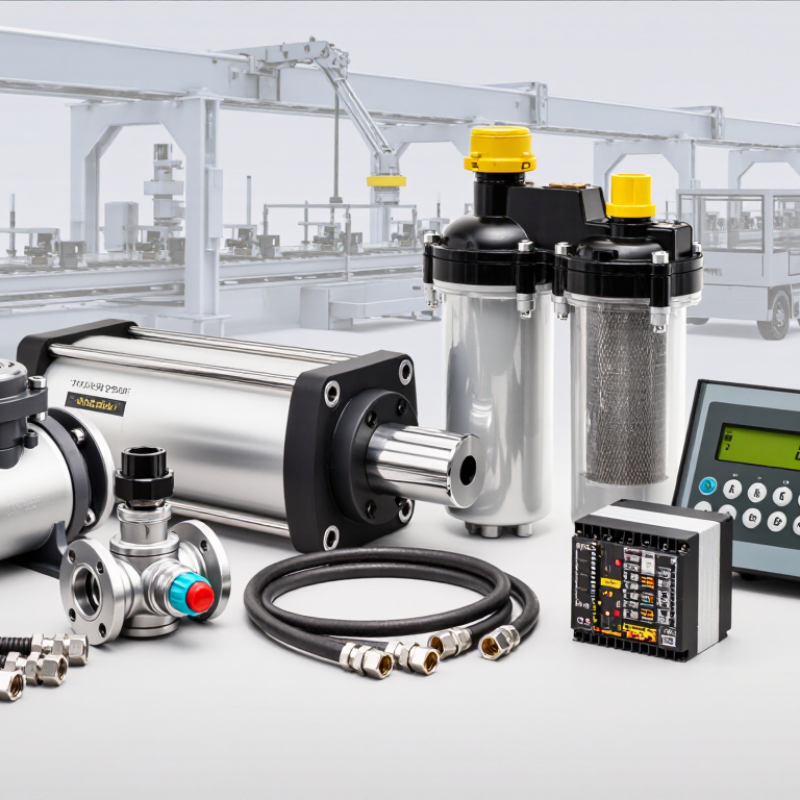
Hydraulics and Fluid Power Components: Core Functions and Applications
2026 Best Hydraulics and Fluid Power Components to Buy
Hydraulics and fluid power components convert controlled pressure into movement, force, and repeatable work. A pump supplies flow, while valves direct it through actuators. Cylinders create linear motion. Motors create rotary motion. Filters protect precision surfaces from particles. Reservoirs help manage heat and air separation. Small parts matter.
Grand View Research’s 2024 Hydraulic Equipment Market report valued the global market at about USD 49 billion in 2023. It also forecasts steady growth through 2030. The U.S. Department of Energy notes that poorly maintained fluid power systems can lose substantial energy through leakage, pressure drops, and heat. This makes component selection an operating decision, not merely a purchasing task. In compact machinery, a correctly sized valve can improve response and reduce wasted flow. In construction equipment, robust hoses, seals, and filtration support safer, longer service. Bigger is not always better. I have seen oversized pumps create heat instead of useful force.
Tips: Match pump displacement, valve flow ratings, and actuator load requirements. Check ISO 4413 safety guidance before installation. Measure contamination levels regularly. A clean filter is cheaper than a damaged pump. Select seals for temperature, pressure, and fluid compatibility. Review return-line pressure, too. It is often overlooked. Track cycle time, noise, oil temperature, and leakage after commissioning. Data exposes assumptions. Recheck the design after real field use.
2026 Best Hydraulics and Fluid Power Components to Buy
Hydraulics and Fluid Power Components: Core Functions and Applications
| Component | Core Function | Typical Applications | Typical Operating Range | Common Materials | Key Selection Criteria | Maintenance and Safety Considerations |
|---|---|---|---|---|---|---|
| Hydraulic Gear Pump | Converts mechanical shaft power into hydraulic flow by trapping and transferring fluid between meshing gears. | Mobile equipment Lift systems Material handling | Displacement: approximately 1–250 cm³/rev; pressure commonly 100–250 bar; speed often 500–3,000 rpm. | Cast iron or aluminum housing; hardened steel gears; elastomeric shaft seals. | Required flow, pressure rating, displacement, shaft configuration, fluid compatibility, noise level, and efficiency. | Keep fluid clean, verify inlet conditions, inspect shaft seals, and never exceed rated pressure or speed. |
| Axial Piston Pump | Provides high-pressure hydraulic flow using pistons arranged around a rotating cylinder block. | Construction machinery Injection equipment Industrial presses | Displacement commonly 10–1,000 cm³/rev; working pressure often 250–450 bar; variable-displacement versions support load control. | Steel or cast-iron body; hardened steel rotating group; precision-machined valve plates. | Pressure and flow demand, control type, displacement range, case-drain requirements, contamination tolerance, and energy efficiency. | Use filtration suitable for the circuit, maintain correct case-drain pressure, and monitor temperature and unusual vibration. |
| Hydraulic Cylinder | Converts hydraulic pressure and flow into controlled linear force and motion. | Excavators Clamping systems Scissor lifts | Bore sizes commonly 25–1,000 mm; stroke from several millimeters to multiple meters; pressure commonly 100–350 bar. | Chrome-plated steel rod; honed steel or ductile-iron tube; steel piston; polyurethane or PTFE seals. | Force, stroke, mounting style, buckling risk, rod speed, side-load resistance, seal material, and corrosion exposure. | Protect the rod from impact and contamination, inspect seals and mounting pins, and support loads before servicing. |
| Directional Control Valve | Starts, stops, and routes fluid to control actuator direction and motion. | Automation Machine tools Mobile hydraulics | Common port sizes: 6–32 mm; flow commonly 10–500 L/min; pressure commonly 100–350 bar. | Machined steel or ductile iron body; hardened spool; nitrile or fluorocarbon seals. | Number of positions, flow capacity, pressure drop, actuation method, spool configuration, response time, and leakage limits. | Prevent spool contamination, confirm correct port connections, and depressurize the system before removal. |
| Pressure Relief Valve | Limits maximum system pressure by diverting excess fluid back to the tank or a low-pressure circuit. | Overload protection Power units Press systems | Adjustment ranges commonly 20–350 bar; flow capacity depends on valve size and circuit design. | Steel or stainless steel body; hardened poppet or spool; spring-loaded control mechanism. | Maximum pressure, flow capacity, response characteristics, adjustment range, pilot configuration, and stability. | Set pressure with a calibrated gauge, do not use it as a continuous flow-control device, and test periodically. |
| Flow Control Valve | Regulates fluid flow to control actuator speed and synchronize hydraulic movements. | Speed control Lifting platforms Production machinery | Typical flow ranges: 0.5–400 L/min; pressure ratings commonly 100–350 bar. | Steel or aluminum body; hardened needle, spool, or orifice; elastomeric seals. | Required flow range, pressure compensation, meter-in or meter-out configuration, pressure drop, and adjustability. | Check for blocked orifices, avoid excessive heat generation, and verify actuator behavior under changing loads. |
| Check Valve | Allows flow in one direction while preventing reverse flow and helping maintain actuator position. | Load holding Pump protection Accumulator circuits | Cracking pressure commonly 0.3–5 bar; pressure ratings often 100–500 bar; flow depends on connection size. | Steel or stainless steel body; hardened ball or poppet; spring and elastomeric seat. | Cracking pressure, reverse leakage, flow capacity, pressure rating, installation orientation, and fluid cleanliness. | Install in the correct flow direction, inspect for seat leakage, and avoid using a standard check valve for personnel safety. |
| Hydraulic Accumulator | Stores hydraulic energy, absorbs pressure spikes, compensates for leakage, and dampens pulsation. | Emergency operation Shock absorption Energy saving | Common volume: 0.5–1,000 L; gas pre-charge is selected below minimum operating pressure; pressure ratings often 100–350 bar. | Steel pressure vessel; elastomeric bladder or piston; nitrogen gas charge. | Required usable volume, operating pressure range, pre-charge ratio, temperature, mounting position, and certification requirements. | Use dry nitrogen only, isolate and fully depressurize before service, and follow applicable pressure-vessel regulations. |
| Hydraulic Filter | Removes particles from hydraulic fluid to protect pumps, valves, actuators, and precision surfaces. | Contamination control Predictive maintenance High-pressure circuits | Beta-rated filtration commonly ranges from 3–25 micrometers; pressure ratings approximately 10–420 bar depending on location. | Steel or aluminum housing; cellulose, glass-fiber, or stainless-steel filter media. | Target cleanliness level, absolute or nominal rating, beta ratio, flow capacity, pressure drop, bypass setting, and dirt-holding capacity. | Monitor differential pressure, replace elements before bypass opens, and prevent dirt entry during element changes. |
| Hydraulic Hose Assembly | Transfers pressurized fluid between components while accommodating movement, vibration, and installation changes. | Mobile machinery Robotic equipment Power units | Inner diameters commonly 6–50 mm; working pressures approximately 70–420 bar; temperature depends on hose and fluid. | Elastomeric or thermoplastic tube; textile or wire reinforcement; abrasion-resistant outer cover; steel fittings. | Inside diameter, pressure and impulse rating, bend radius, temperature, fluid compatibility, routing, and fitting standard. | Inspect for abrasion, bulges, leaks, and twisting; replace damaged assemblies and never search for leaks with bare hands. |
| Hydraulic Fittings and Adapters | Connects hoses, tubes, valves, and actuators while providing leak-resistant changes in direction or thread type. | System assembly Retrofits Compact manifolds | Pressure ratings commonly 100–700 bar, depending on fitting type, material, size, and connection method. | Plated carbon steel; stainless steel; brass for selected low- and medium-pressure applications. | Thread standard, tube or hose size, pressure rating, sealing method, material compatibility, vibration resistance, and installation space. | Use the correct torque and sealing method, avoid mixing incompatible thread standards, and inspect for weeping or deformation. |
| Hydraulic Reservoir | Stores and cools hydraulic fluid while allowing air release, contamination settlement, and thermal expansion. | Central power units Industrial machinery Mobile systems | Capacity is commonly 1–5 times pump flow in liters per minute for many conventional circuits; actual sizing depends on duty cycle. | Painted carbon steel; stainless steel; aluminum for weight-sensitive equipment. | Volume, heat dissipation, return-line arrangement, baffles, breather filtration, access for cleaning, and fluid level visibility. | Keep the breather clean, prevent water ingress, inspect welds and fittings, and maintain adequate fluid level and ventilation. |
| Air Preparation Unit | Filters compressed air, regulates pressure, and supplies lubricant when required by pneumatic equipment. | Pneumatic automation Packaging lines Assembly tools | Typical inlet pressure up to 10–16 bar; filtration commonly 5–40 micrometers; flow depends on port size and pressure. | Aluminum or polymer body; sintered or coalescing filter media; polycarbonate or metal bowl. | Air consumption, port size, filtration grade, regulator range, condensate capacity, temperature, and oil-free operation requirements. | Drain condensate, replace filter elements, protect bowls from impact, and isolate pressure before maintenance. |
| Pneumatic Solenoid Valve | Electrically switches compressed-air flow to control pneumatic cylinders, grippers, and other actuators. | Factory automation Pick-and-place systems Process control | Operating pressure commonly 2–10 bar; response times often measured in milliseconds; flow is specified by port size or conductance. | Aluminum or engineered-polymer body; stainless-steel spool or poppet; elastomeric seals; copper coil. | Voltage, valve configuration, flow rate, response time, manual override, electrical protection, and compatibility with lubricated or oil-free air. | Use clean, dry air, verify coil voltage, protect wiring from moisture, and prevent exhaust ports from becoming blocked. |
| Pressure and Temperature Sensor | Measures hydraulic or pneumatic conditions to support monitoring, control, diagnostics, and preventive maintenance. | Condition monitoring Closed-loop control Fault detection | Pressure ranges commonly 0–600 bar; temperature measurement often approximately −40 to 125 °C, depending on design. | Stainless-steel pressure port; ceramic or silicon sensing element; industrial polymer or metal connector housing. | Measurement range, accuracy, response time, output signal, electrical supply, connector type, pressure port, and environmental rating. | Use calibrated test equipment, protect against pressure spikes, route signal cables correctly, and inspect connectors for moisture. |
Note: Operating ranges are representative engineering values and vary by component design, configuration, fluid type, temperature, duty cycle, and applicable safety standards. Always verify the technical data sheet and system calculations before purchase or installation.
FAQS
They convert controlled fluid pressure into movement, force, and repeatable work. Pumps create flow, while valves direct it. Cylinders produce linear motion, and motors create rotary motion. Small parts matter.
Match displacement and flow with the actuator load and required cycle speed. Gear pumps suit steady duties. Vane pumps often run more quietly. Piston pumps support higher pressure and variable flow. Bigger is not always better.
Check pressure stability, unusual noise, oil temperature, and shaft alignment. Internal leakage can reduce efficiency without obvious external damage. Record actual readings before replacing parts. Measure before replacing.
Relief valves limit excessive pressure. Directional valves control movement. Flow-control valves adjust actuator speed. A pressure gauge can reveal hidden restrictions, especially during realistic loading.
Select motors by torque, speed, displacement, and duty cycle. Choose actuators according to force, stroke, pressure, and operating temperature. Undersized actuators may stall near the end of travel. That mistake is easy to repeat.
Carbon steel works well for rigid lines in ordinary conditions. Stainless steel suits corrosive washdown areas. Ductile iron supports heavy valve bodies. Engineered polymers can reduce friction, but temperature limits still matter. Details get overlooked.
Seals must match the fluid, pressure, and temperature. They should resist swelling, hardening, and repeated compression. Filters protect precision surfaces from particles. A clean filter costs less than a damaged pump.
Use pressure relief valves, hose restraints, burst protection, and guarded moving parts. Keep emergency stops reachable, even when operators wear gloves. Interlocks help during maintenance but do not replace lockout procedures. Safety needs repeated checking.
Test the system under realistic load, not only at idle. Track cycle time, noise, oil temperature, pressure spikes, and leakage. Sensors can show trends, but calibration is essential. A bright dashboard can still mislead.
Dust, vibration, cold starts, and contamination can change real performance. Selection charts provide useful guidance, but measured data may disagree. I would question impressive efficiency claims without cycle testing. Some uncertainty remains.
Conclusion
The 2026 guide to Hydraulics and Fluid Power Components explains how pumps, valves, motors, actuators, filters, and control devices work together to generate, direct, and regulate fluid power in industrial, mobile, and automation systems. It outlines the strengths and applications of major component types, helping readers select solutions that match pressure, flow, speed, load, temperature, and control requirements.
The guide also presents practical methods for evaluating performance, compatibility, energy efficiency, safety, and installation needs. It highlights durable materials, improved sealing technologies, smart monitoring, contamination control, and protective features designed to support reliable operation. A detailed buying approach compares suppliers by product quality, technical assistance, availability, total cost, maintenance demands, warranty support, and expected service life, enabling buyers to choose components that deliver dependable performance and long-term value.